
KRENG
Pepijn Caudron / Composing an unseen worldPepijn Caudron on casting sounds, composing for theatre and the environments that get under our skin.
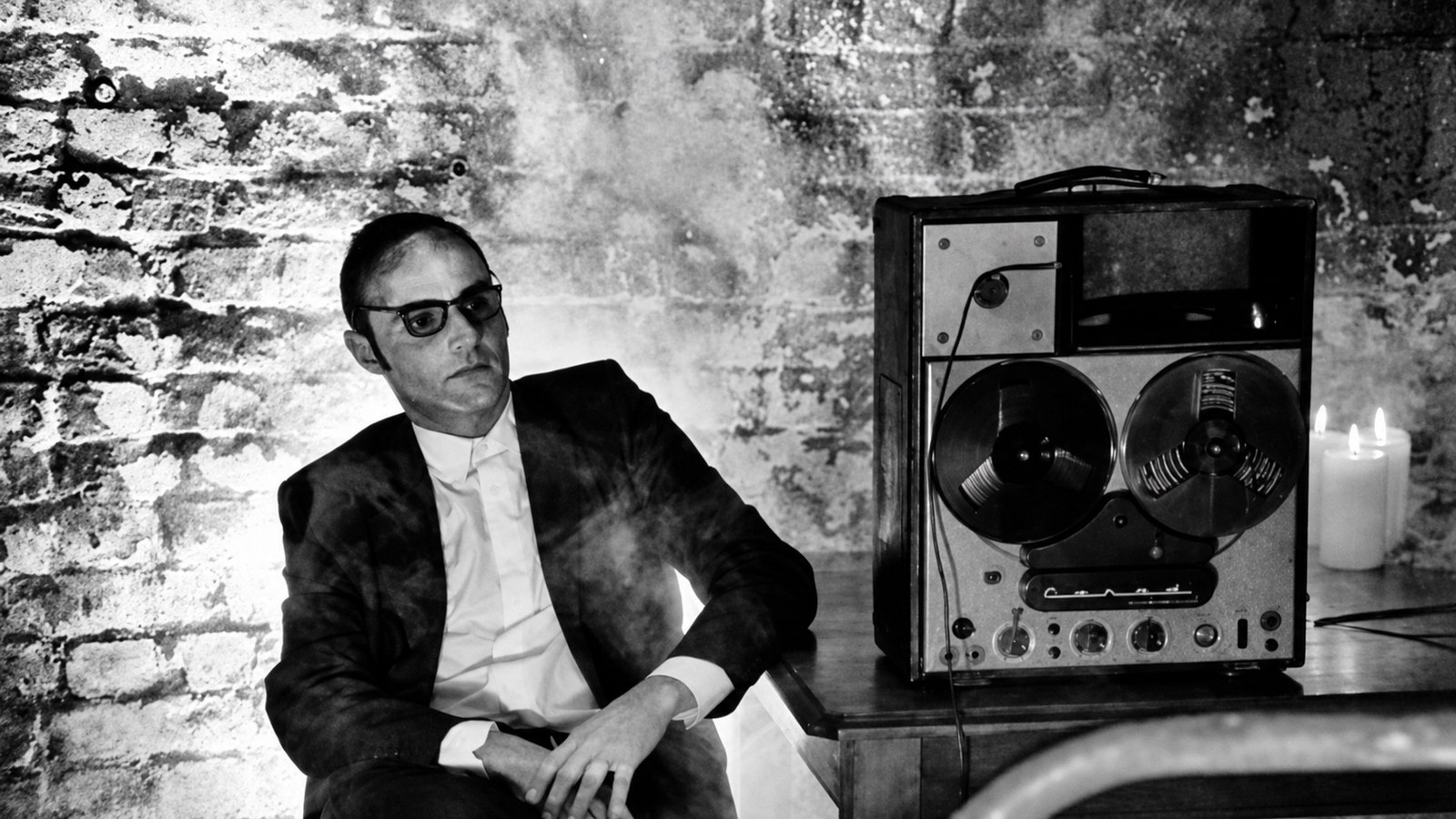
Before Pepijn Caudron begins composing a score, he does what he calls “the casting”. He listens for instruments, recording methods, colours and histories that might inhabit a scene. In this October 2012 conversation, the musician behind Kreng describes composition as a patient encounter with existing sounds: trying combinations, waiting through their apparent incompatibility, and noticing when a relationship begins to form.
The setting is his work with the Belgian theatre company Abattoir Fermé and the collection Works for Abattoir Fermé 2007–2011. Caudron distinguishes between music serving a scene and music intended to stand alone. He also explains why an environment can be more unsettling than a direct illustration of a character’s feelings.
With Wormhole released on 7 May 2026, this is a good moment to return to the working ideas behind the name. The original interview is presented in full, alongside Secret Thirteen Mix 038, archive photographs and a new editorial afterword.
Introduction and archive edition by Justinas Mikulskis.
In this conversation
01 / ConversationStructure, feeling and listening
Do you construct your music by trying to channel certain emotions or by employing more technical/architectural/experimental focus? What is more important to you - structure or emotion? And what kind of emotions do you try to convey?
A lot depends on what the actual purpose of the music is. Music that needs to be purely functional (music that needs to enhance the atmosphere of an actual setting) is not supposed to be about structure. I simply follow the visual & emotional structure of a scene. When it comes to music being autonomous (music that is intended to be listened to as a thing in itself), structure becomes a vital ingredient of the composition. For example: the 10" "Monster" is not concerned about pleasing the listener. It's all about enhancing the visuals for which it was made. The good thing is that it forces me to think about structure in a different way. Sometimes the visual cut comes in at a very unpleasant moment (music-wise) and that way I am forced to abort certain melodic lines or structures I had in mind. The unpredictability of a montage makes my music go into very unexpected directions. I like that kind of exercise.
When I am composing music that is supposed to be autonomous, I work in another mindframe. It's hard to explain how this works. Words like 'structure' and 'emotion' seem to merge in a way that is not conscious. I just keep working on a piece until it feels right. Or wrong.
In your music various different sounds are heard ranging from neoclassical composition to avantgarde, from dark drone soundscapes to jazz elements. What do you think unites those elements in your music? The history behind them, their actual sound, their concept, structure?
I have no idea. These are the sounds I have been listening to for as long as I can remember, It was always John Zorn, John Cage, Duke Ellington, Diamanda Galas, Yma Sumac, Les Baxter, Martin Denny, Ennio Morricone, Bernard Herrmann, Coil, John Coltrane, Miles Davis, Sun Ra, Scorn, Aphex Twin, Autechre, J.S. Bach, Danny Elfman, Alan Lomax, DJ Shadow, John Barry, Godflesh, DJ Vadim, Tortoise, Jerry Goldsmith, Billie Holiday, Amon Tobin, Dmitri Shostakovich, Throbbing Gristle, Pan Sonic, Kevin Martin, Brian Eno, Morton Feldman, Charles Mingus, Art Blakey, Max Steiner, Thomas Newman, Mike Patton, etc... I have no idea what unites them, but I think it has something to do with shying away from doing what is expectable. Reaching for something that is unknown to mankind, taking a risk and putting your vulnerable self out there.
“I just keep working on a piece until it feels right. Or wrong.”

02 / ConversationCasting sounds and serving a story
How do you write your compositions? Do you use sheets of paper or compose everything electronically?
I do not use sheets and I do not compose electronically. Mostly it depends on what I am looking for: a certain scene needs a certain atmosphere. The first thing I do when I start working on a score is ‘the casting’: choosing the right instrumentation in terms of colour, atmosphere, timbre, cultural reference and history. I scan my records, looking for the right musicians, composers & recording methods. That's the most important job. When that is done I start building a sample-library. From this point it becomes a very time-consuming job: trial and error, hit and miss. I listen to combinations of sounds (for a very long time) to see if they work together. They might not make any sense at first listen, but sometimes it helps listening to two very non-corresponding loops for more than 2 minutes. Your brain starts to hear connections between the sounds and before you realize it, there is a symphony unfolding in front of your ears. I consider it as a privilege to observe the chaos and organize it into something that becomes listenable…
In Kreng music we hear instruments and moods mostly encountered in theatre. Listeners and viewers can easily identify this music as music written for play or performance. What do you think, why are such combinations of instruments used in theatre?
Hmm… It’s interesting that you’re asking me this, because they are not… Most 'contemporary' scores for theatre are electronic-based-laptop-soundscapes. They have a tendency of being quite pretentious and arty.
I use a lot of 'classical' instrumentation: strings, piano, vocalisations... I am doing this because I am an avid soundtrack-buff. I love the way music (and sound) is deployed in cinema, because this is, according to me, the place where it works best. I kind of like to think about myself as someone who is working within this tradition. Soundtracks are composed to enhance the storytelling, whereas music for staged art always has a tendency of being 'inventive', which is not relevant to me. When composing for theatre I do not consider myself to be an artist in my own right, I rather play the part of being a humble servant to the story and the atmosphere.
03 / ConversationThe stage, other people and the unknown
What it is like to create music for Abattoir Fermé ? Can you find there any identity with your personality and their creations? What work of Abattoir Fermé has inspired you the most and why?
The most rewarding thing of working with these guys is the inspiration I get from their creations. Writing music for a performance is very different from sitting at home and trying to come up with something out of nowhere. I am given a certain atmosphere, characters, development, storyline, timeframe. For me it is about creating an environment for the actors and the audience. It is not about psychology or analysis. The sound and the imagery have to create a certain universe in which they can experience their horror. This means that I hardly ever try to illustrate the psychological state of the protagonist, I think it's a lot more rewarding to create an environment. The audience will identify with the actors, but it is the environment that will scare them. This is a good thing because it allows me to work with the spectators on a subconscious level. Most of the time the audience is focused on the actions being performed on stage, so all the other parameters of theatre (lights, sound, staging, etc.) can crawl under their skin unnoticed, like a slow-spreading poison. I want the music to be purely functional on an immersive and subconscious level.
Lately you have been involved in some collaborative projects with various members of Belgian musical underground. What can you tell us about this experience and the Belgian musical underground itself?
There is not much to say. I know that Belgium has a thriving underground-scene, but I hardly have any contact with it. There's Eric Thielemans, a percussionist, but I consider him more to be a shaman. We have been trying to set up a full blown collaboration for a long time now, but our schedules never seem to be able to make it work. Then there's also Bram Bosteels (Kaboom Karavan), he was in my live-band when I was touring my Arcanum-live-set. We're good friends and I really value his opinions about my work. There's no doubt that we will eventually work together again.
What is your religion? What do you believe in? What, in your opinion, is the reason of birth existence and death? Even though the questions might provoke metaphysical, scattered thoughts, we still want your opinion.
I am a bit reluctant in answering these kind of questions because I don't like to be pinned down on having a certain look at how we should live our lives. To tell you the truth: I don't know. I'm 37 years old and there has never been a constant idea about religion in my life. I think that this 'searching for the truth' is kind of a religion in itself. We all know that there is no truth to be found, but I do believe in the universal character of certain feelings: Love, Loss, Friendship, Fear, Greed, Lust, Excitement, Pain, Joy, etc... These are religious signifiers to me. By analyzing them, an individual should be able to make a distinction between right and wrong. Some of us manage to live their lives according to what they have learned along the way. I don't know if I am one of them, but I am trying...
In your social page you left comment "50 seconds of hardcore truth" under the excerpt of Jodorowsky interview about violence . Could you elaborate on your own ideology regarding violence (in general, violence in your art, as influence, in your life)?
What can I say? I love Jodorowsky's work, and I adore the fact that he is so decisive. Violence is an endless inspiration. It shows mankind beyond indoctrination. It brings us back to our primal self and it creates an intriguing insight in how we are designed. Man has a dark side, and I consider it to be of utter importance that you face this dark side. If you accept it you will be able to become a better person. It is a blast to enjoy life side by side with your demons and your fears.


Secret Thirteen Mix 038
Kreng
A layered selection of 34 tracks, compiled at The Attic on 18 September 2012. John Cage, Kaija Saariaho, Giacinto Scelsi, Colin Stetson and Aphex Twin are among the artists brought together. Hear the relationships between recordings alongside Caudron’s account of “casting” sounds.
Give the sounds time to meet
I keep returning to the passage about listening to two loops that initially seem to have nothing in common. Caudron gives the encounter time. A connection may appear, and the listener’s perception becomes part of the composition. It is a practical description of work, but it also offers a way of listening to music that does not explain itself immediately.
The theatre answers make that patience physical. Sound creates a place for the audience to inhabit while its attention is directed elsewhere. Caudron is interested in what a room, an atmosphere or an interruption can do before we have found words for it. His account of serving a story also leaves space for limits: a visual cut can interrupt a musical phrase, and the composer has to follow that interruption somewhere unexpected.
Our original questions sometimes reach quickly for categories: theatrical instrumentation, religion, darkness. His answers are often most revealing when he resists them. An extensive list of influences gives way to a modest admission that he cannot explain exactly what unites them. That uncertainty belongs in the archive as much as any memorable statement.
Wormhole gives us a new release to place beside this conversation in 2026. I would use the older interview as a set of listening questions, rather than an explanation fixed around everything Kreng will make. What is a sound bringing with it? What happens when it meets another? And how long are we willing to stay before deciding that they do not belong together?
About this archive edition
Originally published on 14 October 2012. The complete questions and answers remain in their original sequence. References to current events, places of residence and forthcoming releases belong to that original date. New chapter headings, an introduction and an editorial afterword by Justinas Mikulskis accompany the historical conversation.
The featured portrait is an AI-assisted restoration and 16:9 crop of the original archive image. The original articles did not identify the photographers. Other archive photographs are reproduced as originally published. The artist’s Secret Thirteen mix is embedded with a direct listening link; obsolete external embeds have been replaced by release links. Album artwork is reproduced alongside links to the official release pages and their credits.

1 Comment
Pingback: ACL 2012: The Top 20 Albums of the Year « a closer listen