
Rafael Anton
Irisarri
The Sight BelowMusic that asks you to stay.
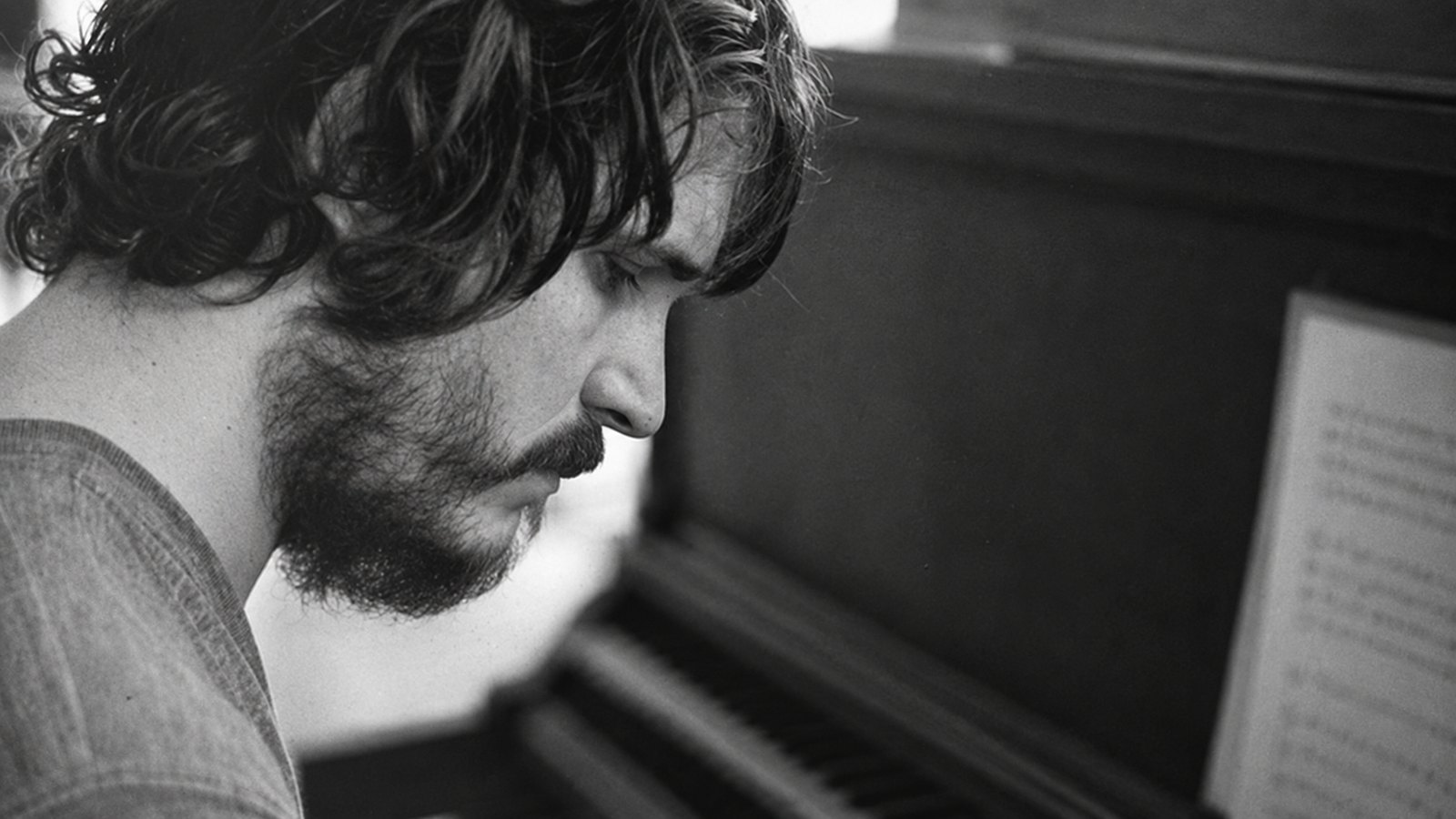
How much of a record do we hear before deciding what it is worth? In this September 2013 conversation, Rafael Anton Irisarri approaches that question as a composer, mastering engineer and the curator of Substrata. His answers connect the private work of listening with the very practical work of making a room in which people can listen together.
The Sight Below, his landscape-inspired solo recordings and the Seattle festival meet here in a shared concern for attention. The interview belongs to 2013: The Unintentional Sea is still forthcoming and Substrata’s July edition has just taken place. A new editorial afterword follows the complete conversation.
Introduction and archive edition by Justinas Mikulskis.
In this conversation
01 / ConversationListening past the first impression
In the hyper-technological world of today, it seems that the brain is becoming increasingly disconnected from the ears. How has this affected such activities as sound design and recording?
For the past several years, I've been concerned with this same issue. It's amazing, that we have instant access to information anywhere in the world, but simultaneously miss out on what is most immediate to us. Take, for example, how we listen to music these days: it's mostly online, jumping from one thing to the next, sometimes in a race to find and consume the “next big thing.” The social media "revolution" didn't really level the playing field, all it did was create a digital clutter to make it harder to navigate and find something meaningful. It also made everyone spout an opinion and become a pseudo-tastemaker for their limited audience. Works that take months to produce, or in some cases even years, can now be completely devalued in just one posting online. And of course, there is no time to listen to something (let it sit for a little bit then listen again before forming an opinion) – everyone has got to be the FIRST to say something, whatever that may be! Some of the music I love the most took many listens to grow on me. Is it possible to experience the same today?
Furthermore, many of us nowadays allow a computer algorithm direct what we should listen to next based on a series of predetermined marketing parameters. One thing I really appreciated while growing up and discovering music was the fact, that I had only so many records. I didn’t have much money, so my collection was fairly small (but potent), so I would hang on to an album for a very long time and listen to it more frequently. This begs the question: what is the point of having access to 100K songs, if you will only listen to a very small percentage anyway? A friend of mine works for a large software company (I live in Seattle, so you can guess which one) in the music division, creating products similar to Spotify. During some research, he discovered, that out of millions of songs in the company's database only about 12% were played more than once. This is so telling of exactly what is wrong with us today. We've got no focus. I strongly believe the pervasive pandering to the self-defined needs of ADD culture is precisely what's amiss with our relationship to experience today, and refuse to participate or contribute to it. I don't want to make any music that provides instant gratification to the listener on first listen.
02 / ConversationThe work behind the sound
Do you consider yourself a conceptualist/sound designer/musician?
A colleague of mine years ago told me we were more like a car mechanics, but for music. I agree with that assessment. I'm a full-time artist/producer/composer, this means I've got to be prepared to wear many hats and switch gears from project to project. And that's fine for me, I enjoy everything that I do – from mastering other people's music and embellishing it to remixing and just producing works for others. Just like a car mechanic...
What inspires you for your artistic investigation?
It depends. Inspiration comes from many sources – anything from a good book to a great film, an amazing photograph, a unique sound, a new piece of music-making gear. It's hard to pinpoint. Sometimes ideas just come out of thin air - a melody gets stuck in your head and you need to bring it out. I know it's pretty cliché thing to say, but it is so true though. I remember many years ago, I woke up with a piano motif in my head, and for days, I kept hearing the same notes, so I finally played and recorded it. Years later, I found that recording and it became the basis for an entire composition. Lesson here is: never discard anything that comes unexpectedly.
03 / ConversationLandscape, memory and transformation
What is the creative concept behind your new album coming out on Room40?
This new album is the second album in a series of landscape-inspired musical renderings. As you may remember, my first album for the label was based on my immediate surroundings, the Pacific Northwest and its pop/folk cultural references. With 'The Unintentional Sea” I'm exploring the idea of transformation of place. The inspiration behind it is The Salton Sea, a failed river re-direction that happened in California at the beginning of the 20th century. It was an ecological man-made disaster – it created this artificial sea, which, in the 1950's, was seized and rebranded by corporate land developers, flipping it into a dream getaway destination for West Coast elites. Of course, before long, record temperatures and a rising level of water mineralization led to the mass death of fish and other wildlife in the area, and in turn, so too did the resort town's population: everyone living there skipped town and left behind a vast post-human deserted wasteland. It's really heartbreaking and depressing. We are the worst of all species.
How important is the sound quality in your recordings and in your daily life?
It depends really. I believe content ultimately is more important. What's the point of having a perfect sound quality, but nothing interesting to say? Some of my favorite recordings are not technically perfect but they have an aesthetic I appreciate very much. Ultimately, what sounds good for me could be horrible sounding for another person. I do, however, appreciate when things are done with great care, you know, great effort and dedication to the work. There is nothing more frustrating than playing on a bad sound system that can't capture your vision, and particularly more annoying if the people running the sound simply do not care much about the work they are performing. As a trained sound professional, this to me is a cardinal sin. Furthermore, I have a very particular sound aesthetic, which has taken a long time and effort to develop (years of studying and researching, beta testing, and in some case just happy accidents happening in the studio). Replicating this live is very challenging, but rewarding when things get done right.
If your personal imagery were a world, how would you describe it?
Empty, quiet and removed from everything and everyone else as it's lonely when you are amongst people too.
“I either want your full attention or none at all.”
04 / ConversationA room built on trust
Let's talk about the festival you are curating. The Substrata Festival took place this year on 18-21 July. Any highlights you’d like to share with us?
The festival was absolutely lovely, with great performances by everyone playing and a very respectful and attentive audience. I don't like picking highlights as I believe every artist is unique and equal. After all, we are all doing the same thing (art) and the only difference between many of us is just the level of notoriety. There were no “headliners” at the festival and everyone was treated the same way. Incidentally I've made it a point to have each evening play out from start to finish and capture your full attention. There were no “fillers” or “warm up” acts at Substrata either. In fact, I really wanted the audience to experience music many probably never heard before and challenge existing preconceptions – some of the artists performing had never even played in Seattle (or the US in some cases) before the event. I like for the listeners to hear something new, something foreign to their ears.
Having said all of that: I was very happy with Grouper's performance. I've played (and toured) with Liz many times over the past 5 years and always loved her sets. When we first started discussing her participation at Substrata 1.3, I asked her to make a special acoustic piano and tape loops set (as opposed to her modus operandi of guitar loops and voice). It really paid off and it was mesmerizing listening to “Alien Observer” on acoustic piano, voice and effects. Wished I had recorded it!
How did the idea of organizing the Substrata Festival arise?
When I started Substrata two years ago, the idea was to create an intimate space for performances in an engaging, collegial environment. I wanted a similar style and format to many of the art festivals I've been lucky enough to play in Europe (and beyond) over the last six years. Our tiny event is entirely DIY. We have no corporate sponsors, we don't “buy talent” from monopolistic booking agencies, we are not scratching anyone's back: we exist pretty much autonomously in our own little corner of the world. It is truly a community supported event – it simply wouldn't happen without the kind donations of all our devoted followers in Seattle and abroad. Substrata will never be one those summer festivals with several overlapping events, where you'll catch a few minutes of an artist's performance, only to run to the adjacent stage and catch another brief excerpt. I either want your full attention or none at all.
What criteria have you used for building the schedule and line up?
I've made some lasting connections with artists and listeners all over the world, while playing shows and touring, and in the process have witnessed some amazing performances by some of my favorite acts. Almost everyone who has played at the festival, I've either played with them, seen them live or was connected in some way. I don't really want to book any artists I've never seen before - I want to be able to vouch for their quality and this effort has really worked well, not only from a curatorial standpoint but also on how we've been able to build an audience for a very niche kind of music in Seattle. Everyone who donated money to the festival this year did so before they even knew who was playing it, simply trusting my curatorial skills and judgement.
Substrata is as much a reflection of my own artistic pursuits as it is of our collective (Substrata audience) particular (and peculiar) tastes in music and art. As a TinyMixtapes music blog put it last year: “Substrata aims to create artists out of its attendees; it aims to shatter the barriers between the stage for the performers and the viewers. It is very small and personal, only happens once a year, and might be one of the more interesting experiences you are missing.”
I strongly believe that bringing critically-acclaimed international artists and composers to Seattle culturally enriches our local community – after all, it's not every day you get to experience an artist like Oren Ambarchi, Biosphere, Nils Frahm, Tim Hecker or Scanner up close and see their process.
05 / ConversationMaking a life in music
How important is diplomacy in the music industry?
I'm a brutally honest person and prefer to be treated with the same level of honesty as I treat others. If diplomacy means not been entirely honest, then I guess I'm a bit screwed. Don't get me wrong, I'm not a belligerent person (well, sometimes you have to be in this business, but not for the most part). I don't think anyone is getting rich here either, it's important to be polite and treat others respectfully. If you cannot respect someone's work, then perhaps you shouldn't work with them. Ultimately if all about building lasting relationships with people you respect, not having a sense of entitlement and knowing that everything you do is a privilege. We are LUCKY this is what we do for work.
Could you say that you are a successful artist? Why? Please share your biggest achievements related to music.
Depends on how you define success. If by success you mean been able to work in this field I love and make a modest living from it, visiting new places and meeting fascinating people whenever possible, then sure thing. My biggest achievements have been able to continue to work doing what I love, working with people I enjoy their company and respect and most importantly, having a loyal listener base that truly appreciates what I do and supports my endeavors whenever possible. Can't really ask for more. I'm humbled by all of it.
How important is art in your life? Do you have your favourite films directors, painters, fashion designers and other creative acts? Please elaborate on this.
Some people are defined by their race, nationality, sexual orientation, etc. I'm defined by art - from what I do with my own to what I consume by others. It shapes my aesthetic, worldview and outlook. There are many favorite artists to list so I'll be brief: Jan Svankmajer (filmaker), Horacio Quiroga (writer), Eduardo Txillida Juantegi (sculptor), Kazimir Malevich (painter), and Rei Kawakubo (fashion designer).
Any exciting projects for the future? Could you present them in depth?
At this moment I'm finalizing the next ORCAS (this is my ambient pop music project with singer/songwriter Benoit Pioulard) album for Morr Music. I'm also plotting new European touring dates in the Fall/Winter this year to present a new piece in 4.1 audio setting. All this while working through a stack of remixes and mastering projects in the studio. Busy times!

Secret Thirteen Mix 088
The Sight Below
Released thirteen days after this interview, Irisarri’s 19-record selection brings together Arvo Pärt, Cluster, Seefeel, Slowdive, Akira Rabelais and others. His own recording of “The Rains of Castamere” also appears. It offers another way into the conversation’s attention to texture, memory and patient listening.
Giving a record time
What stays with me in this interview is the connection between attention and trust. Irisarri asks listeners to spend time with difficult music, but he also accepts a curator’s responsibility: he wants to know the work he is putting before them. People donated to Substrata before seeing its programme. That is a relationship built through choices, over time.
For a journal, there is something useful in that distinction. We can make another recommendation very quickly. Giving someone a reason to return to a record takes more care. His answer about the albums that needed several listens feels particularly relevant when revisiting an archive. An older conversation can offer a way into music that a release announcement cannot.
The relationship between sound and place has continued through his work. Points of Inaccessibility, released in February 2026, grew from work with visual artist Jaco Schilp at Utrecht’s Uncloud. In 2013, The Unintentional Sea gave him a way to think about a landscape transformed by human intervention. The later record offers another point of entry into how a place can shape a composition.
There is also a close connection with his description of Substrata in Where Light Pauses in the Silence of the Sun, his June 2026 album with Abul Mogard. Its source material came from a three-day residency at Morphine Raum in Berlin in March 2025, with the audience gathered around the performers. Live recordings were subsequently developed across several studios, with contributions from Martina Bertoni and Andrea Burelli. The room and the people in it became part of a longer process.
I like returning to the conversation with those records available beside it. The demand for attention has somewhere concrete to lead: a piece of music, enough time, and permission to hear it differently on the next listen.
About this archive edition
Originally published on 11 September 2013. The complete questions and answers remain in their original sequence. References to current events, places of residence and forthcoming releases belong to that original date. New chapter headings, an introduction and an editorial afterword by Justinas Mikulskis accompany the historical conversation.
The featured portrait is an AI-assisted restoration and 16:9 crop of the original archive image. Original photographic credits are retained. The Sight Below’s Secret Thirteen Mix 088 is included with its original cover and a Mixcloud player. Other listening references link to official release pages. Album artwork is reproduced alongside links to the official release pages and their credits.

2 Comments
Rafael is the man. Period.
Pingback: Secret Thirteen Mix 088 - The Sight Below | Secret Thirteen