Chinabot
REWRITING THE NARRATIVE
Saphy Vong / Lafidki on Asian musical narratives, DIY community and the visual language of Chinabot. The original 2018 interview is accompanied by a seventeen-track label mix.
Listen to the mix
Chinabot (or, more appropriatelly, CHINABOT) began at some point in 2017 as a digital space for new and experimental soundforms in Asian music. It wears many hats – label, platform, community. The reason for this multiplicity has to do with purpose, which in this case is to share and create new narratives of Far Eastern music. Since the very beginning, Chinabot has been busy doing exactly that. 6 billboard-bright, extremely eclectic and visionary records are testament to that productivity and variety of styles brewing in the region as of late. On the Chinabot compilations you will hear everything from glitch experiments to borderline-industrial sounds to strange and twisted pop music.
To celebrate this project, we invited the founder of Chinabot, Cambodian musician Saphy Vong (a.k.a Lafidki), to make a mix for us. It gives a snapshot of where the label comes from and where it’s going, including some upcoming material or stuff made specifically for this compilation. Saphy’s Chinabot mix also paints the picture of a region in transition from old to new at a mind-boggling pace. The music this process breeds is as surprising as one might expect.
Wanting to find out more, we asked Saphy some questions:
01Beginning with a community
How did Chinabot begin?
I had been involved in music from a very young age: playing in bands, touring, setting up shows, designing a ton of record covers/posters/flyers etc. The reason I started the label was because I felt the need to put a few ideas and people I believed in together. And also to put out my friends music. No one was interested in putting out releases by artists I like. So I decided to do it myself. At first it wasn’t so much done out of responsibility, but it was obvious that if you wanted something to happen you had to start it and not wait around for other people to do it for you. It was the obvious choice and the combination of the artists seemed to work. I wanted to establish a community to celebrate outsider music from Asia.
My background always pushed me to do more. Many historical records, photographs, films and music were destroyed in Cambodia. The country not only lost many lives, but also the knowledge, traditions, culture, inspiration and hearts of these people. I was fascinated about people who try to rebuilt the archives but I didn’t want to just focus on Cambodia and the past. I wanted to focus on the present with all the neighbouring countries who are culturally really close to each other.
I met so many amazing artists and promoters in Asia who wanted to help each other. Exchanges between Asian cities just make more sense because it’s easier to promote each other and organise tours. I helped touring bands with my venue Lop Loy in Phnom Penh when they wanted to play between Thailand and Vietnam. I wanted to create a place where Asian artists can discover harmony all together.
It’s an open space and we are all passionate about music and the culture that exists around music. I want to stay DIY, because in this industry of music, I get a bit bored, and I want to share exciting music.
And when I was touring with my project Lafidki, I met so many interesting people I realised that in Europe now, in this experimental electronic music scene, we need to open doors that are a bit more connected to other continents. There is an erasure of asian people’s narratives from electronic music and I express the necessity to rewrite these voices into history. Creating a platform specifically dedicated to drawing marginalised identities into the mainstream has been integral to this. I’ve always been a part of the scene, but I noticed that you had to specifically look, and look harder, for asian artists.
What we see overall is a fetishization of those countries’ social troubles. By fetishizing misery and appropriating attributes that are extremely personal to Asian artists, Western creatives decide to ignore a colonization of ideas that cannot be legitimized by their global freedom of circulation.
The main interest is how do all these unique voices interact with one other, what links what, and what the general language is. It might sound random at first, but I do believe there’s a reason it all fits in my head as a whole.
02Artists and Asian narratives
At the moment Chinabot already has many artists associated with it. How does this list grow?
I saw a really talented, active scene when I was touring in Asia, but it is a bit isolated because the media is not interested. Several artists from the Chinabot label are really good friends. The best part is hanging out together. We have been friends for a while and interacted with each other separately, but this was the first time we all toured together.
what’s been great is watching the label expand, so that you can have discordant and dissonant music alongside something which is very much not so: that first Dagshenma on the same label as the new Pal Hwang Dan makes for a pretty diverse roster but it’s not that it doesn’t make sense. I’m looking for really DIY people , I don’t see the point as a label to promote more artists who are already famous. A lot of small labels just follow the taste of bigger labels, there is no research or real identity, it gets pretty boring. I look at the label as a big mixtape. You should be able to play it all the way through: sure, it’s not the same style all of the time, but it feels like it’s part of a compilation. That’s why I still like to release one compilation a year – it’s a good showcase of the diverse artists. Contemporary versus Traditional – I love that tension.
Everyone else came along the way — some found us, some were found, all in different and yet similar ways. It is the eagerness to learn and to experiment that ties all these people together, and that is the foundation.
It’s a global network of cultural exchange while affirming the strength of its contributors.
The Chinabot platform aims to create a new narrative about Asia and its music. What is this Asia you are presenting like?
While the world around us tries to market something as Asian music- like it’s the only thing happening in our music – we’ve grown tired of it.
It’s not an appropriate idea of what the “Asian sound” is, plus that’s trying to take many fucking countries and say they all sound the same. I’m just sick of it as world music export. This big fantasy that doesn’t exist.
This sense of belonging is clearly communicated, particularly in the coalitional relationships between Chinabot on issues such as politics and Asian identity.
The media really focuses on Japan and China, it dehumanises us again. The continent is so much bigger and more diverse. We want to show a slice of what we like, the cultures we come from and our own ideas.
03Cultures, representation and sound
You’ve spent a lot of time both in Europe and Asia – how would you describe the crucial differences, especially in an aesthetic sense?
Imported Western culture is placed on a pedestal in Asia, and asian artists often seek the approval of foreigners over the support of their own countrymen.
The countries are trying to cleanse their background to move into a fully Western world. Colonization never stopped.
Innovation comes from lots of different people and we’ve been too focused on white men being innovators. Asians are underrepresented in many fields.
Yet, while I grew to know many White, Black and Latino singers, I was surprised to learn just how few Asian artists were considered mainstream musicians, and years later, their absence is still mysterious and frustrating.
Asian artists in America or Europe seem to be heavily focused on K-Pop music. There are some barriers that will keep Asian artists at the point they’re in. From a marketing standpoint, it’s a huge risk, and no one has yet taken that risk. Music executives seem hesitant to market Asian artists in music, perhaps due to the stereotypes about them or fears that consumers won’t connect. And the artists that do find major fame tend to have looks that are more racially ambiguous. But I like to see a mixing of cultures, experimentation and fusion, which can normalise what’s seen as other and makes it seem less weird. We need more diverse representation.
To fix this issue, studios need to market Asian artists the same way they would artists of different races and ethnicities. For now, some Asian artists are taking matters into their own hands by putting out original music on various platforms. I feel that it’s just a matter of time and effort for more Asian artists to get exposure. The talent is there; now, it’s all about getting those voices successfully out into the world.
The music on the Chinabot releases is very eclectic, is there anything that connects all of you aside from Asia and an experimental approach?
I had a chance to go outside the box and to explore whatever I wanted. It was a good opportunity to do something new, even if the music scenes are too divided nowadays, That’s why I want to bring more traditional projects: punk or even pop as well. The electronic music scene is a bit selfish nowadays – it seems to be more about getting exposure and working with brands than making a community.
Rather than pandering to the exoticizing whims of the world music market, their aesthetic of the artists I invited reflects the complexities of today’s networked age. Many of their releases reference Asian traditional music and local culture, while others move so far into the future they don’t bother with terrestrial references.
04Artwork and physical objects
I am very intrigued by the artworks on the Chinabot releases – could you tell me a bit about them? Who makes them and what’s the story behind them?
The branding and packaging of the label is really important to me. it makes the things easier because I’m a graphic designer.
The idea with a record or tape is to hold it, turn it around, and then turn it around again. You see it and you smell it. You get attracted to it in a way. The physical product also costs something, so you have to make a choice of what you really want. You create your taste. If you have everything, and can download it all, where’s your taste? Where’s your critique of it? That’s missing, and that’s important.
It’s important to grab somebody’s attention, even if they had no idea what it was. That had been my work method always. Make a piece, design a cover, Release.
In order to make the invitations work you need to have a firm understanding of your language and the different dialects the different artists of the label speak.
From the beginning, the art side of the label is important as much as the music even if my visual ideas are clean and messy.
My approach gives expression to a life spent in pursuit of the limits of the esoteric and turning trash into treasure. Honestly, the way I view a lot of what I do, music or design art or video, it’s all kind of collage to me. It’s just that I’m making all the material that I’m collaging together. That’s kind of the way I work. Just generate stuff and piece it together. I’m really inspired by the chaos of big cities in Asia.
I channelled my childhood interests in drawing and graphic design into art for records both for my bands and my own solo project and show posters. I always liked the absurd aesthetic.
I’m glad to create a project that could combine my graphic interests and designs in collaboration with other artists. There is certainly a specific aesthetic and a packaging identity with all the releases, but the mood and overall stylistic approach differs from one release to the other. There is always an open dialogue with the artists about the directions and final results.
Yes, I love talking with the bands and the research side of things. I guess I have always wanted to dig deeper for knowledge and connections. I think it’s fascinating to learn about the environments and time period the songs were recorded in and under. Also I love to hear about the meaning behind the songs and the where the artists were drawing inspiration from.
It’s a bit different with the 2 compilations because it’s always a specific theme (Phantom Force, Mental Maps..)
Kevin Gan Yuen on the last compilation describes my style as “modern who meets traditional aspects with a psychedelic color scheme”
I quite like it.
05Touring, future plans and the mix
You had a tour recently – what was that experience like?
It was great and short, I just played 4 gigs in Czech Republic, Slovakia and Austria, I don’t tour anymore for a whole month because I don’t have enough time to work on my music. I got good feedbacks on my live sets, I met amazing artists and promoters, I had one day off for exploring the Czech forests – that’s great because usually I spend all my days on trains or bus. More promoters are involved and impassioned to promote more experimental electronic music. It’s even better than bigger cities sometimes. I was lucky to play Donau Festival with a proper sound system and really nice people involved. This last tour was a bit of a transition to my new tracks.
I’m trying to work more with a narrative. It’s often about layering sounds, reacting to what is already there and then something takes shape like drawing or painting intuitively. Working with patterns respectively in sound or visual composition I find fulfilling. I know better how to make certain things in my music more effective. I’m cutting and pasting until I discover some kind of narrative, some kind of internal logic. It’s something like a meditative aural collage. But I feel like sometimes the experiment is to take myself somewhere new.
How do you see the project advancing – what is the vision and what are the plans?
I’m happy with where the label has gotten this year, but there is so much to do, so much to learn and so many things to get better at.
The label has definitely grown alongside me and the artists themselves. We were able to manage several tours together and a big event at the Museum of Asian Arts Guimet in Paris about our idea of new asian music.
It is quite fascinating to see this grow organically, and it still remains challenging to see what will come up next even from the people who surround it and are associated with it.
One of the greater things we all experienced throughout the year is also how all these different people and voices became part of what the identity of the label is. There is space for all the artists to express their thinking and general activities and we influence each other daily on many levels. That’s what makes the puzzle complete to an extent. I mainly work with Samin Son and Ayankoko because they are based in Germany and France – it’s a bit easier – but Pisitakun is coming back from Bangkok in September, we’re planning a tour together in Europe.
We are definitely taking a break from live activities until early September. On the other hand though, there is a very busy release schedule with new albums
I still have some feelings on the ecology of physical media and how if we see a genuine, prolonged resurgence in analogue media and playback systems, then how can we deal with the increased buyers market soundly and ecologically.
We have the second EP by Pisitakun, an album by Ayankoko, several releases from new artists… and much much more!
In the mix you included an old Cambodian song – could you tell us a little bit about it and about the mix overall?
The artists on this mix aren’t all necessarily electronic or experimental, but I think they’re all transcendent in nature and underrated outside of their motherland.
This is my mix of some of the goodness in Asia right now, a lot of upcoming releases with Chinabot, some of the artists produced especially a track for this mixtape.
I wanted to included 2 old pop songs from Cambodia and Korea because they are just beautiful.
06Records in the mix
Selected releases represented in the original mix.
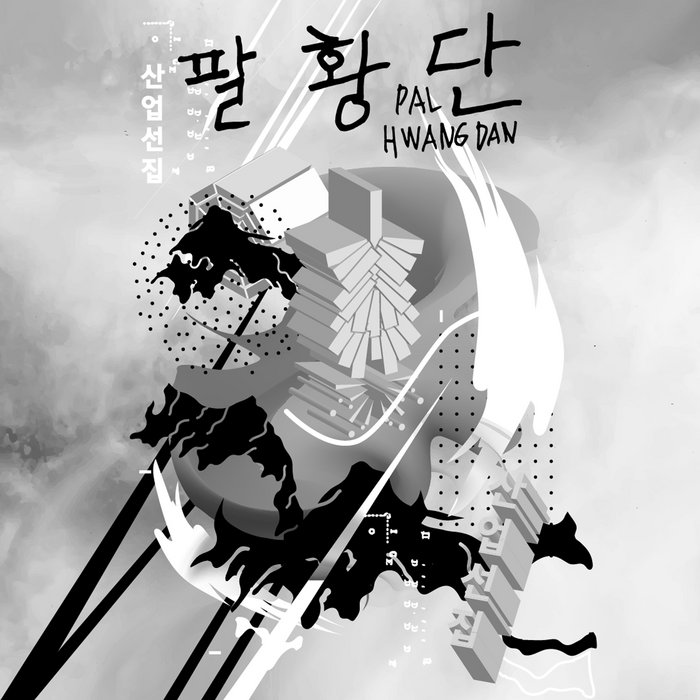
Concrete Ark, Klimt’s Butcher Shop and Outside Forest Mathematics appear across the mix. All three come from this album, connecting several passages in Vong’s selection.
Original release artwork
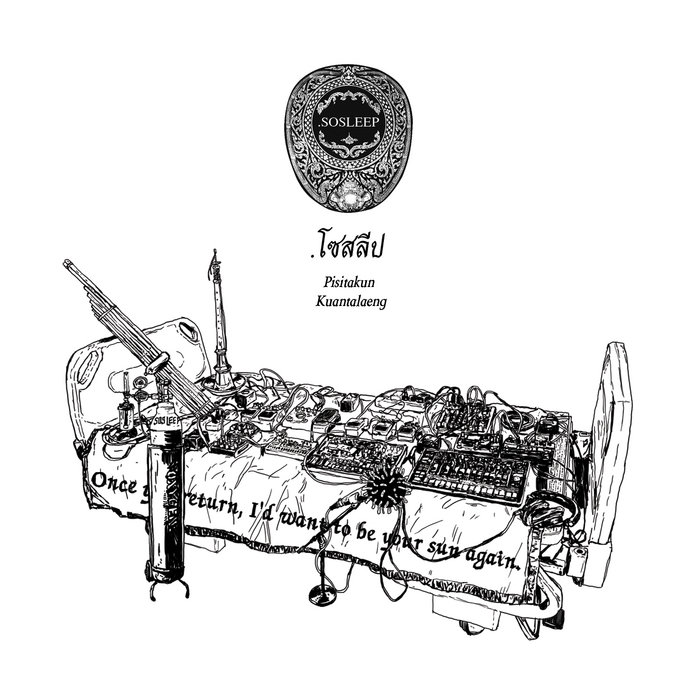
SOSLEEP02 introduces Pisitakun’s release in the original label mix. The full six-part album offers a longer encounter with the material previewed in this 2018 selection.
Original release artwork
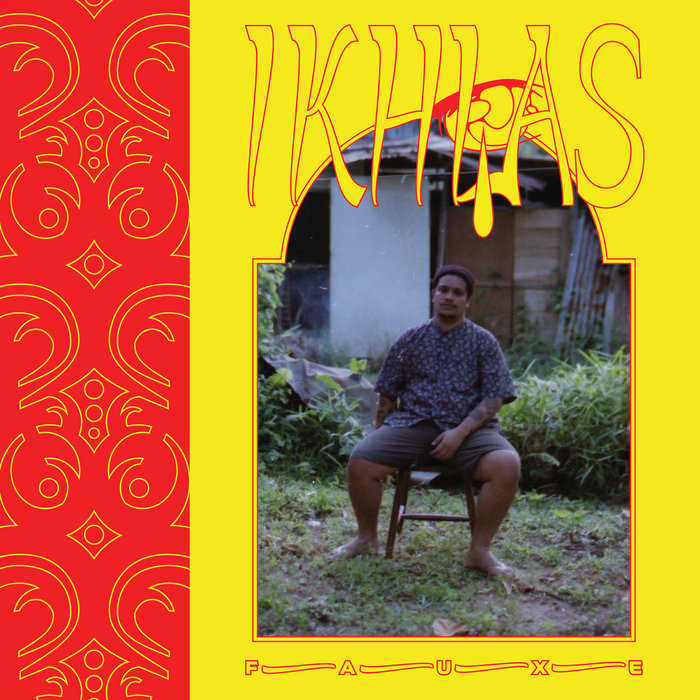
Punday brings Fauxe into Vong’s mix. The album places the track beside other recordings from Chinabot’s early catalogue.
Original release artwork
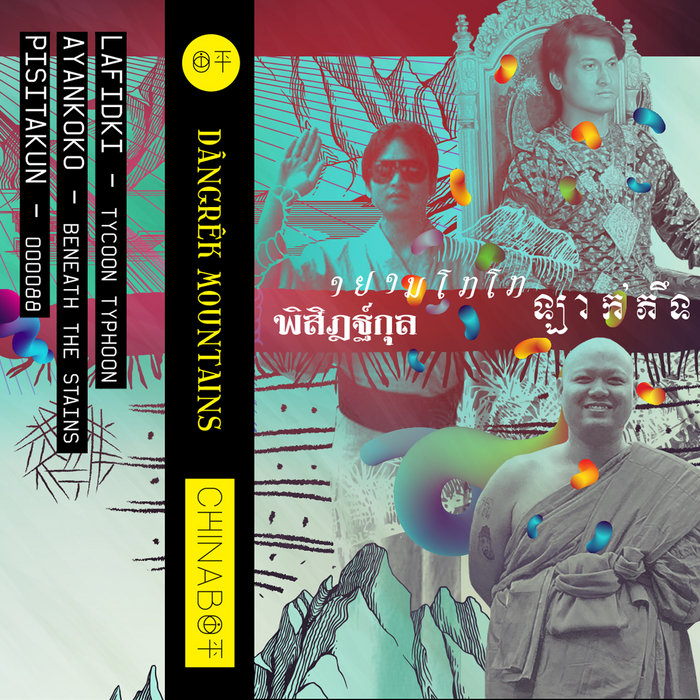
Lafidki’s Tycoon Typhoon appears early in the mix. This split release places it alongside recordings by two other artists from Chinabot.
Original release artwork
Sources and image credits
- Original interview: DJ S13. First published 2018-06-12. References to forthcoming releases and plans retain their original historical context.
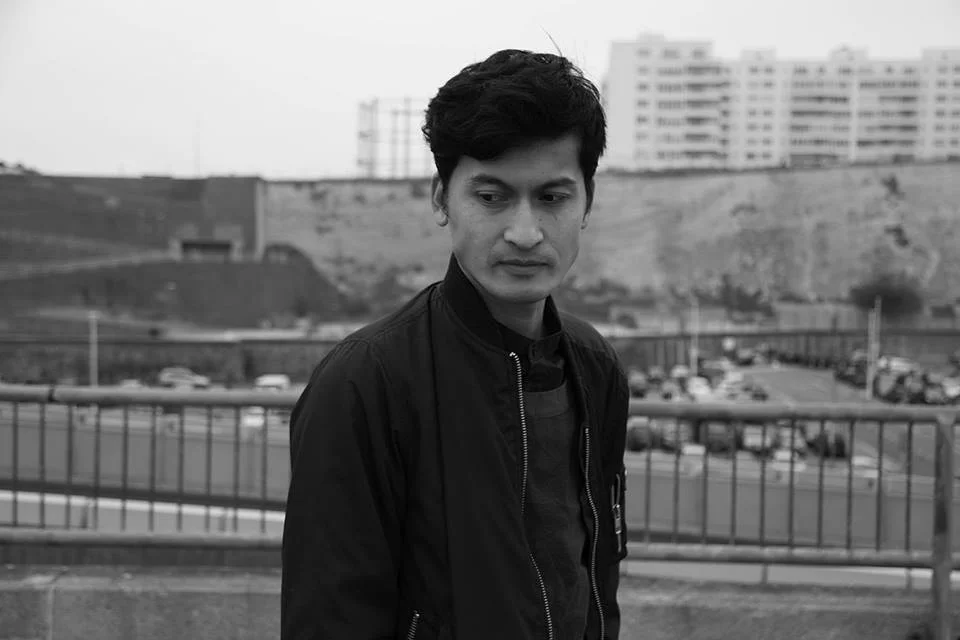
- Saphy Vong / Lafidki portrait: official artist photograph; photographer and capture date uncredited. Chinabot.
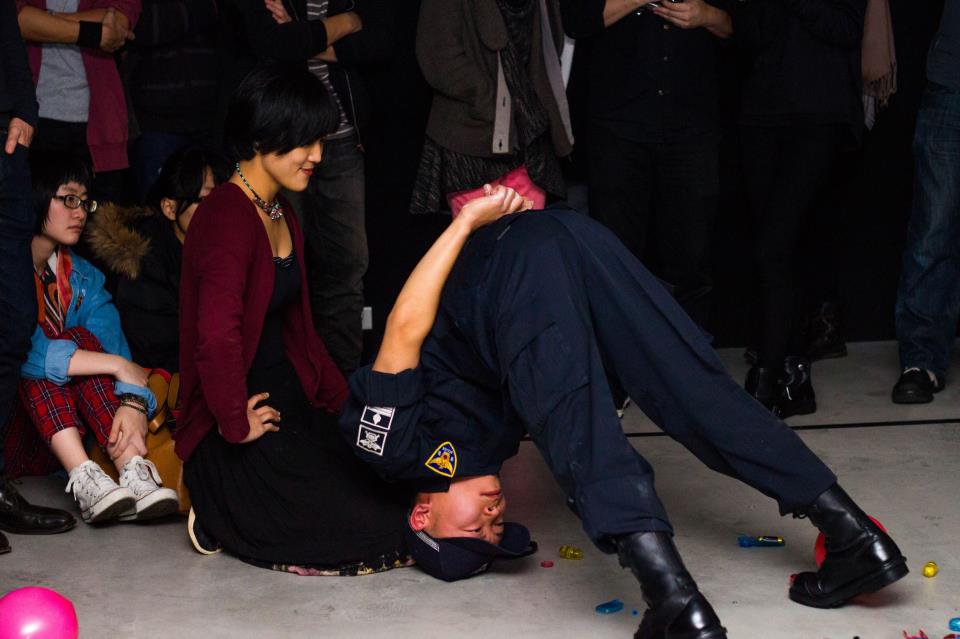
- Original performance photograph: Samin Son at Depopulate 01, presented by White Fungus at VT Artsalon, Taipei, 2012. Photo by Damien Owen Trainor. Clean source of the photograph used in the original S13 cover. White Fungus / Obieg.
- Label wordmark: Official Chinabot website.
- Original interview and exclusive mix: Secret Thirteen archive.
- Release artwork and track identification: Pal Hwang Dan — Saneopseonjip 산업선집.
- Release artwork and track identification: Pisitakun — SOSLEEP.
- Release artwork and track identification: Fauxe — I K H L A S.
- Release artwork and track identification: Lafidki, Ayankoko & Pisitakun — Dângrêk Mountains.