Interview
Martial Canterel Behind the Dusty Curtains
Sean McBride on analogue machines, lost memories and emotional isolation. A conversation that follows Martial Canterel from a retrospective compilation to the personal space behind the music.
Read the conversation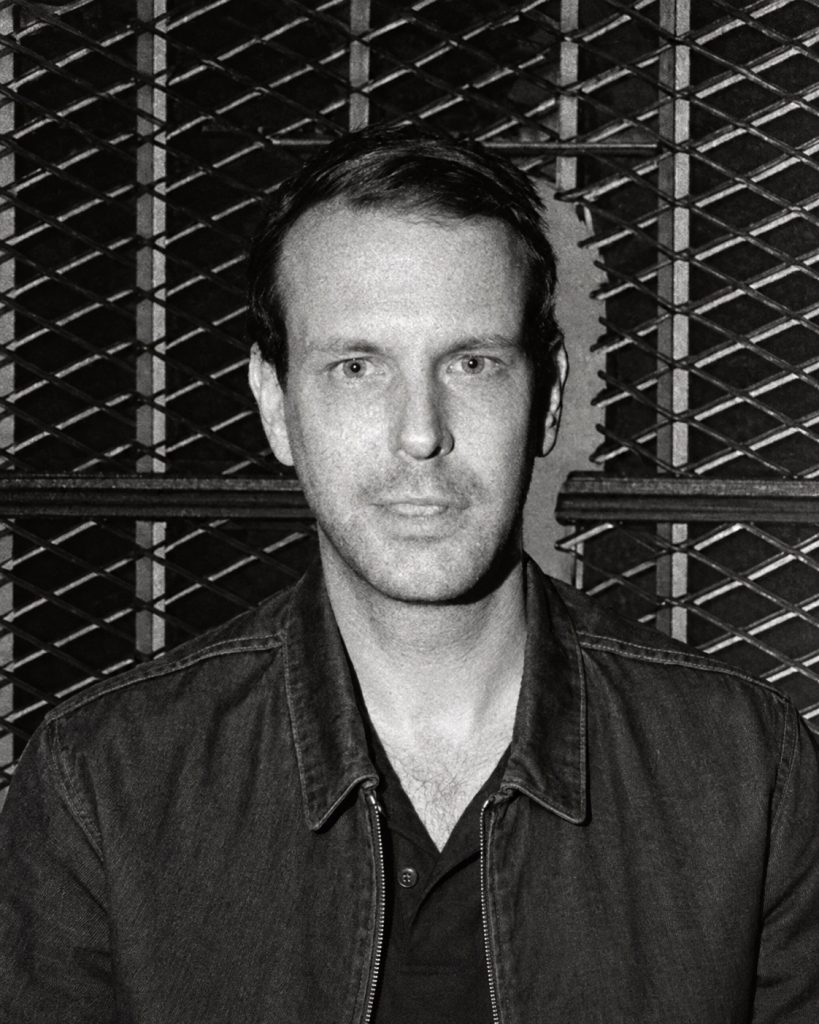
Behind the Dusty Curtains – the interview with Martial Canterel
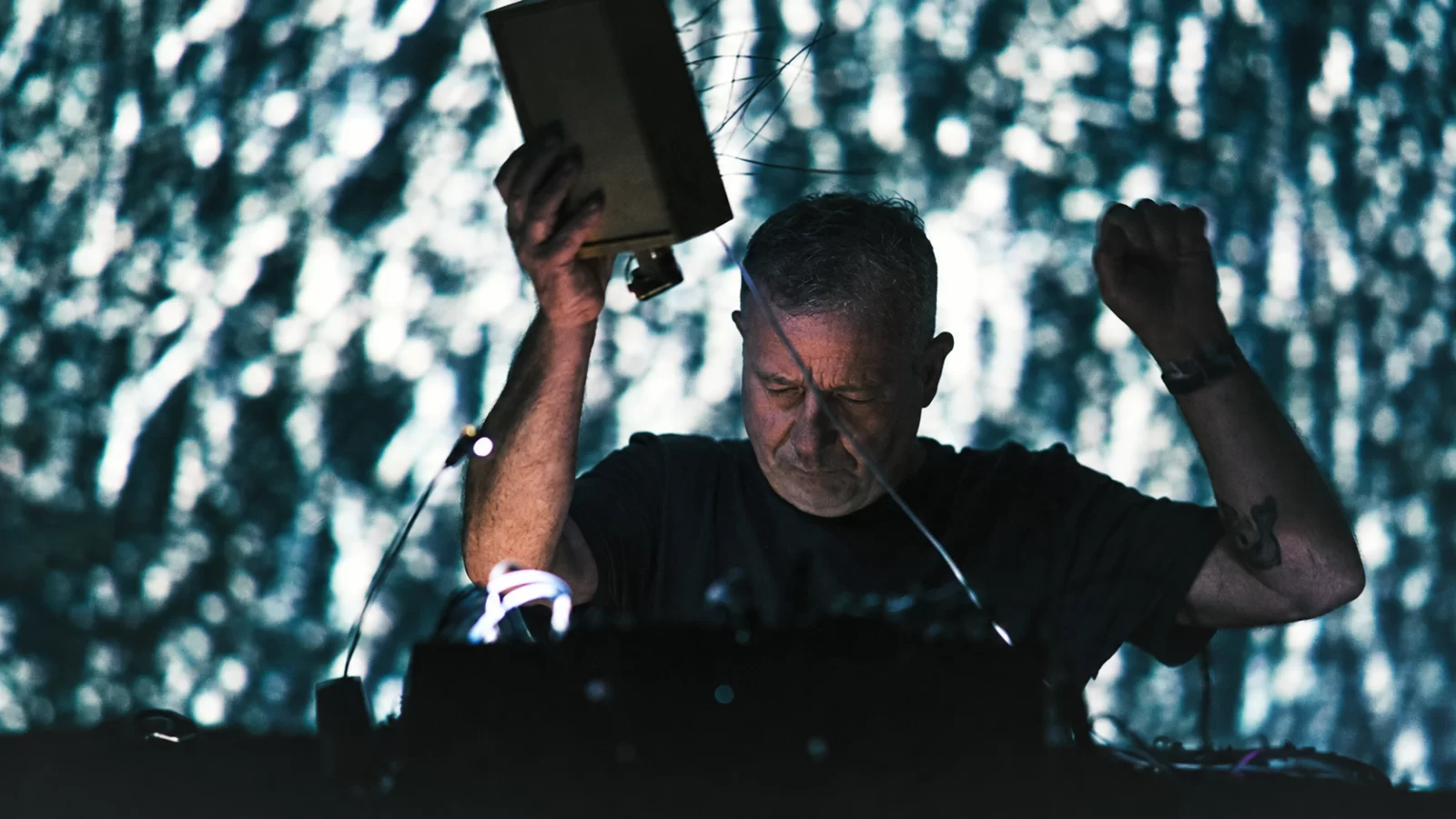
Martial Canterel, a solo project of Sean McBride (also one half of Xeno and Oaklander), has always echoed some deep resonances with the post-iron curtain vibe of the Eastern Block. Sometimes it even sounds like the soundtrack of the grim history of the 20th century’s Europe, channeled through very personal, emotional and melancholic soundworld of Sean. Even though he is from New York, the strong ties with the Old Continent seem quite prominent in all of his projects. Moreover, Martial Canterel strikes with the very refined perception of lost memories, emotional isolation, personal and hermetic space, the world of “dust, curtains, secret chambers, deserts”. It’s like the walk through the haunted, yet beautiful mansion full of traces of gloomy past. And the analog and human nature of the sound makes these thoughts even more alive.
Thus, having Sean answering our questions was quite an excitement as it was really interesting to know some more details behind the stage. Electric Voice Records has just released Martial Canterel’s “Navigations Volume I“, a collection of sketches and unreleased rarities, to mark the ten year anniversary of the project. Looking back to all those years, there are many interesting things to talk about.
01Looking back and making connections
Martial Canterel has just released a retrospective compilation album. Did you have any input in compiling the album or did Electric Voice Records fully controlled the process? How this idea emerged?
I approached Electric Voice with the idea as Matthew and I had already established a dialogue regarding the “Electric Voice II” (EVII) compilation. The idea emerged as I wanted to mark the ten year anniversary of the project. There are countless songs, both finished and unfinished that I wanted to present. Many of these tracks are very dear to me as they stand as the heart and soul of the project’s humble beginnings.
How did you meet Electric Voice Records founder Matthew Samways? In your opinion, what is so special about this quite new label from Canada?
We met when he approached me about participating in the EVII compilation in August of 2012. For me it is important that he is young and enthusiastic. More importantly we share a spirited disenchantment with the culture of music, culture at large.
02Emotion, independence and travel
What kind of emotions underlie beneath these coldwave or dark wave sounds? How do the tracks reflect your emotional world, every day life? Or maybe they are more detached worlds existing separately, independent from real life? What is the connection here?
At the outset the feelings and motivations of this music for me were informed by a nearly wholesale foreclosure on normal modes of both production and dissemination, i.e. mainstream culture. There was a somewhat hermetic space that I created for myself, whereby I coined or better yet established personalized conceits that would be stand-ins or figures to express indirectly the complications of the time – an active and evolving metaphoricity, for instance, dust, curtains, falling, secret chambers, deserts, etc. These figures simultaneously became tinged with autobiography and so there evolved an interplay, conjoining of the personal with the critical. This blurring of the lines between the personal and the critical becomes even more integrated when considering the mechanics of the analogue synthesizer – as a tool (instrument) that is rooted in the pre-digital age, it has no parallels with popular digital media (or one could even go so far as to say military technology), it’s boundaries are fixed in time, often forgotten time, and its mechanics are completely elemental, almost biological. The perceived poetics of detachment, of darkly lit enchantment, in effect, are a running commentary on the world as we all experience and live it.
In some ways, making something that is both deeply involving and quite popular (among sophisticated listeners) is the ultimate experiment. Is it true? What do you think, where is the limit between creative independence and being producer’s marionette? What do you think about mainstream culture? Are there only negative aspects there as many die-hard music lovers claim? Or maybe it has some advantages? Share your thoughts.
I think that in this day and age mainstream culture and “underground” culture do not really have a clear-cut boundary – as both are active and unchallenging players in the current digital-information age we live in. This age has led to artists becoming simply curators of taste, DJs, selectors, false memories of yesteryear. And with this there is a hyper-horizontalization of culture – there can be no mastery, no craft, no learning process, only the repeatable, playback-able, and easily framed configuration of pre-existing models – already stored, already formatted, already ready. These conditions seem practically insurmountable, pervading all aspects of culture, of our lives. However, I feel a backlash is mounting and it should have some valuable consequences.
You are touring across the globe a lot. What does it mean to you? How it affects your personality? Are you on a tour right now? Maybe you are preparing for a concert?
Playing live is really, for me, no different from recording or even writing music, so to be able to do this in Rome or Budapest, for example, is a complete joy. Many friendships and even a romance or two have been made across Europe. I love the live show aspect of the project, so to be able to do this every night in a different city is extremely exciting, albeit, slightly backbreaking carrying 140 kg of gear through train stations and airports.
03Finishing, hindsight and recognition
More or less, almost ten years have passed since “Sister Age”. Do you think the electronic music technology and the use of it have moved forward, have been handled better since then?
In the last ten years, there is an obvious re-popularization of hardware music, especially analogue. There are hundreds of small boutique or otherwise hobbyist manufacturers of these instruments across the world. I feel, that for the first time since maybe 1982 there have been breakthroughs with analogue instrument technology, and this is extremely exciting, especially as many items of interest have been made more lightweight, more portable, and more affordable.
How do you know when a piece is really done? Have you ever looked on a finished album with regrets about a particular piece?
A piece is done when I feel the performance of the piece was acted out well. My recorded music is littered with mistakes and bad decision making, but this is part of the human in my music – so I do not necessarily look upon these with regret, but as a minor (traceable) slip and fall in my development as a musician.
When you look back to your career with all its highs and lows, can you imagine having done things differently? Is it more fate or choice?
I cannot think of anything I would have done differently.
Do you feel that any of your records have been overlooked? Elaborate. If it did not happen, maybe you could remember a release, that received lots of attention, was properly evaluated by institutions, media, maybe used for some film, play etc?
This question begs me to be self congratulatory – the press in general are bound up with the aforementioned conditions, so I am often just lumped in as an 80’s revivalist. In this sense everything is overlooked, and in another sense, the press itself being symptomatic of the very thing I am interested in challenging, is part of the dialogue.
04Machines, movement and musical futures
Can we go back a little bit and talk about the hardware? What is the first synthesizer you have ever played? Do you have your favourite instruments or devices?
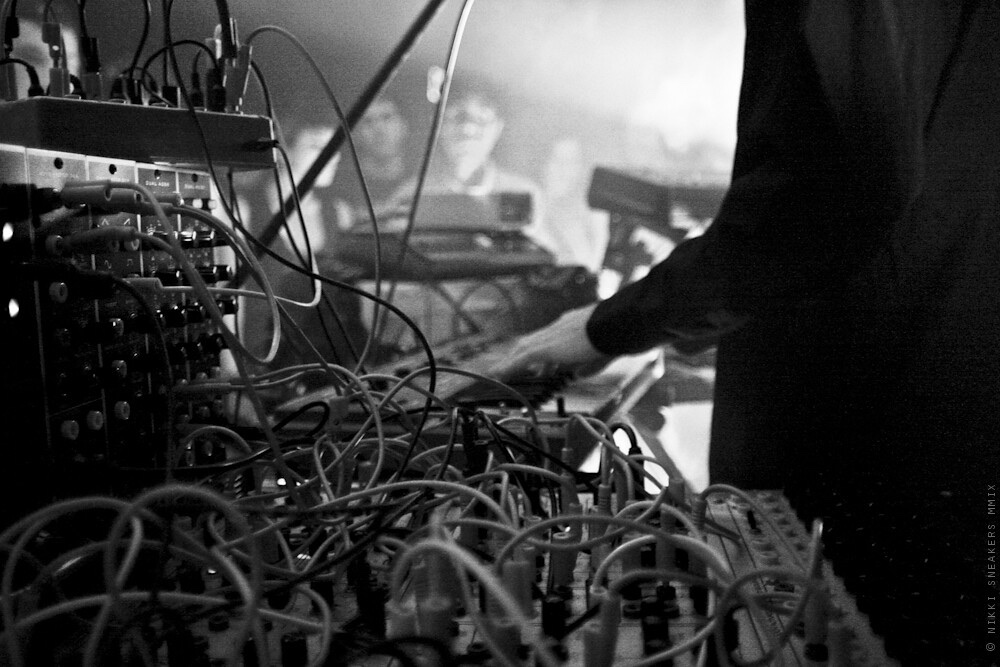
Apart from a toy Yamaha keyboard, the Roland Alpha Juno 2 with programmer – I traded my bass guitar in high school for it ca. 1992. Then when I went to University, the electronic music lab had multiple Sequential Circuits Pro Ones, and Arp 2600 and a large 4 panel Serge modular. My desert island synth would be the Serge Modular. Hands down for me – the most complex and variable synth ever made.
Your music has two quite distinct moods – moving and reflective. Is this a reflection of your own character?
Perhaps.
Do you more rely on basic elements or try to employ more expansive palette of sounds? What is more important – diversity or integrity? Do you prefer eclecticism or consistency?
The sound elements, textures evolve as I also evolve as a musician. Like anything, there are sounds I return to, moments I want to continue to work within, and there are experiments I want to test; some fail, some succeed.
How will music be like in the next century? Are you searching for the reply to this question with your own music? How do you see the current music scene? Is it full of innovations or just reproduction? How do you imagine it in the next couple of years?
My work exists within a sort of personal continuum, a process of learning, experimenting, but most importantly, and this sounds trite, a means of expression. With this said, any objective perspective on the future of music is impossible – I prefer to work within a self-organized vacuum – my previous work being the influence of the subsequent. Perhaps I have always seen the present and the future as a bleak place – hence this self exile.
Do you feel close to the minimalism style of Terry Riley or La Monte Young, for example? Do you think the American composers have developed a new genre in the electronic music? Talking in general, what do you think built electronic music scene? Tell us your insights on essential factors.
I do admire some of the early minimalism of the American composers, however I feel little relationship with it today, as it is perhaps too opiated, too inactive. Although, I must say, as a ground for electronic music it is critical – nearly pure waveforms, the interaction of different waveforms with one another, modulating each other, the temporality of harmonics, etc. In some ways, perhaps the ABCs or 123s of electronic music. I aim to take these principles and in effect make more complex musical structures with more harmonic and melodic variance to truly shape and furnish something that is musical from nothing in real time, with two hands.
05Listening, cinema and what remains
Without doubt, your music inspired many fans, but what does inspire you? Could you tell how you started listening to music? What music do you listen at home, what does it mean to you?
I, like most people, have been listening to music since childhood. I was reared on English and American psychedelic rock, folk music, Tyrolean Zither music, Liszt, Verdi, etc… As a teen in the late 80s, early 90s I listened to the typical range of gothic rock, industrial, shoegaze, experimental electronics…
These days I listen largely to a lot of European schlagger, Harold Budd, occasional wave, certain soundtracks… However I am typically engaged in my own work – so I listen mostly to my own work…..
And how about art, cinema?
The last great thing I watched was Miss Marple’s “Nemesis“.
Your last insights for Secret Thirteen readers, please share everything that was not asked in previous questions.
Bring me to Vilnius!
06Listen further
Xeno & Oaklander
A beautiful and enchanting selection by Xeno & Oaklander, compiled of diverse pieces ranging from renaissance music to 80’s underground wave experiments.
Sources and image credits
- Original interview: Paulius Ilevičius. First published 2013-10-28. The complete original introduction, questions and answers are preserved.
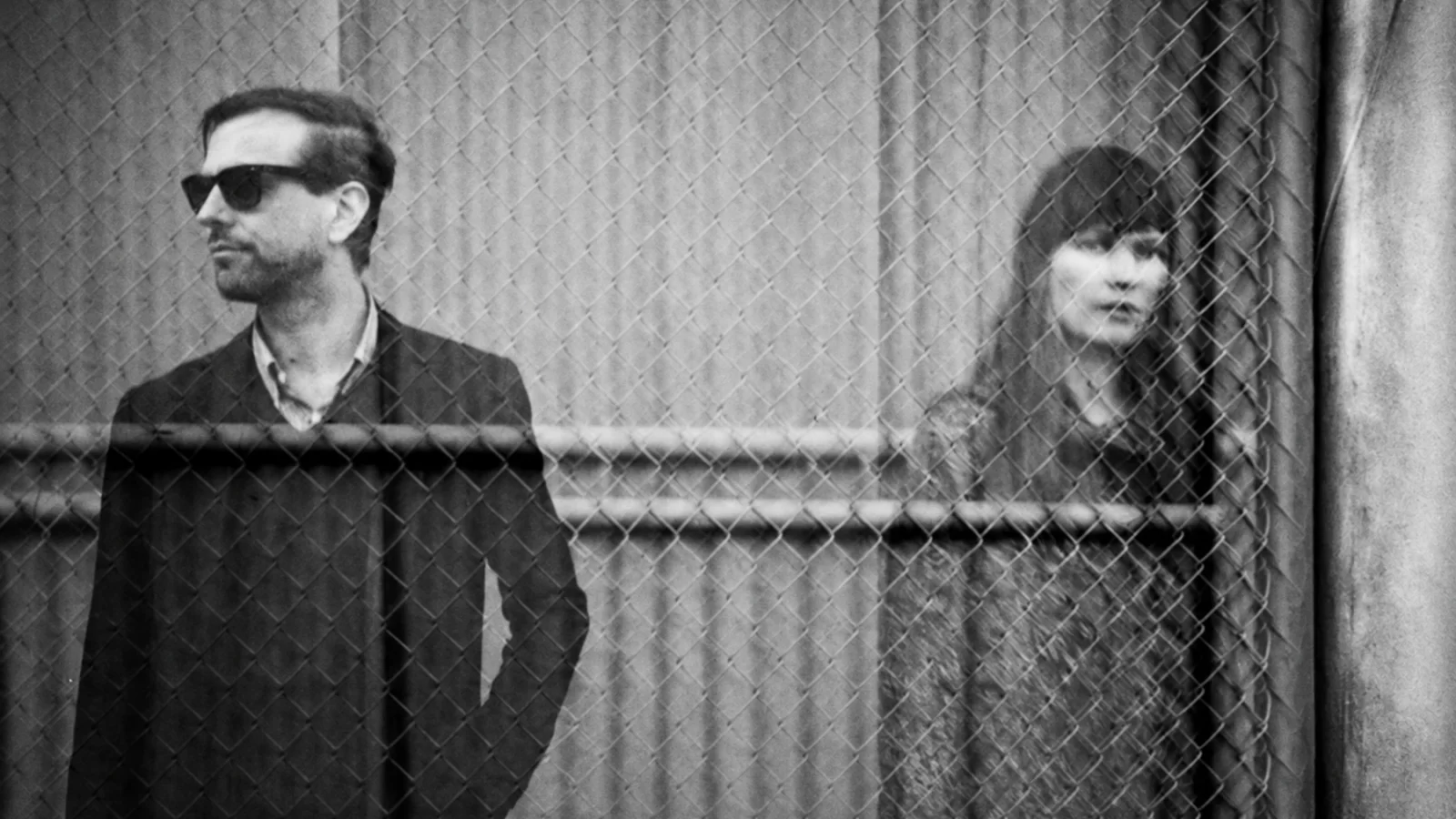
- Martial Canterel / Photo: Dirty Snapshots / Restored photograph
- Martial Canterel / WIERD photograph archive, 2011 / Photo: Nikki Sneakers
- Image source: Publication and credits.
- Original listening reference: Archive media link.
- Original listening reference: Archive media link.
- Original publication: Secret Thirteen archive.