Emra Grid
A Different Backing Each Time
Film voices, distorted jazz, flute recordings and music made in Yogyakarta run through Sean Piñeiro’s mix. His own recordings and synths get between them, making it difficult to tell where one piece ends and another has already begun.
Listen to the mix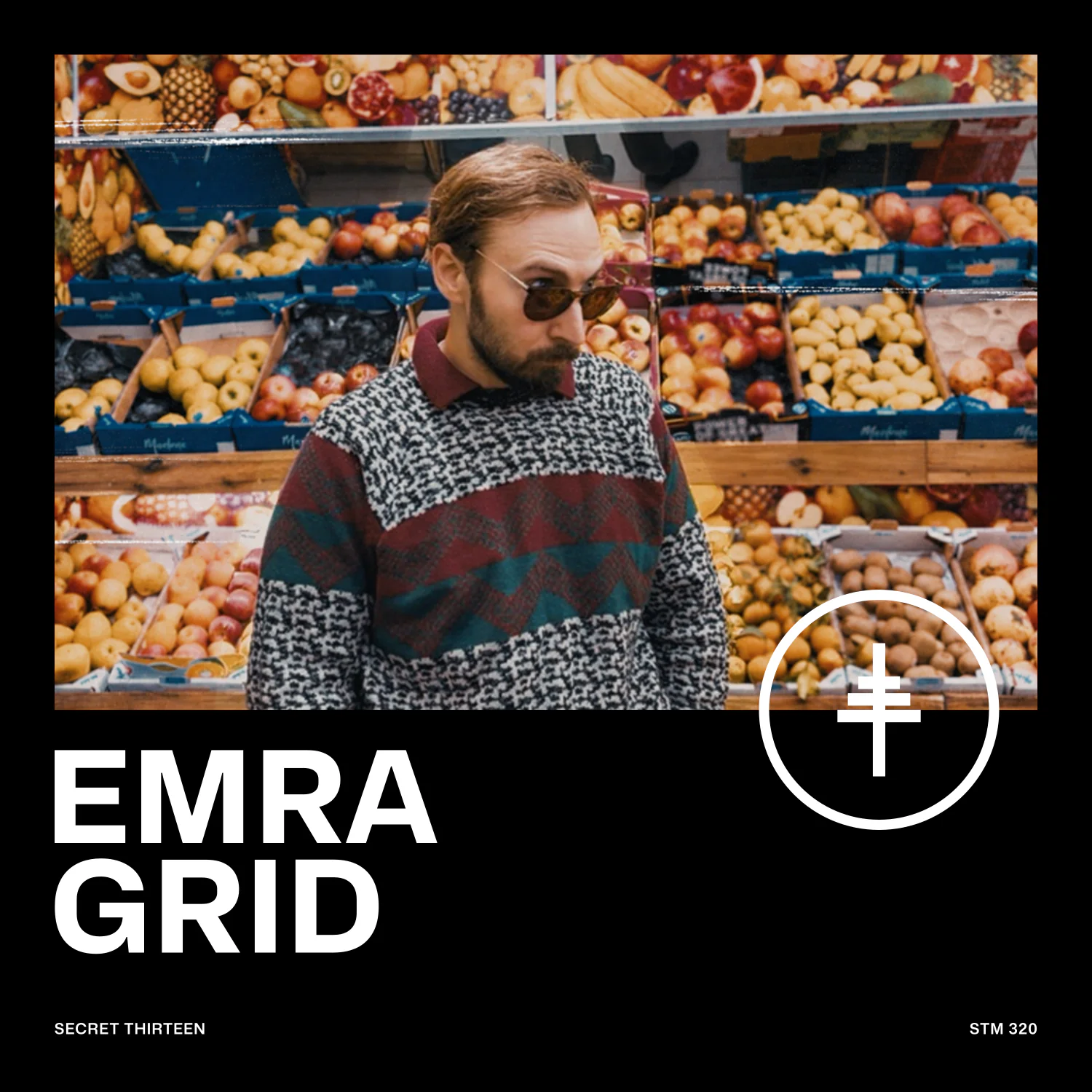
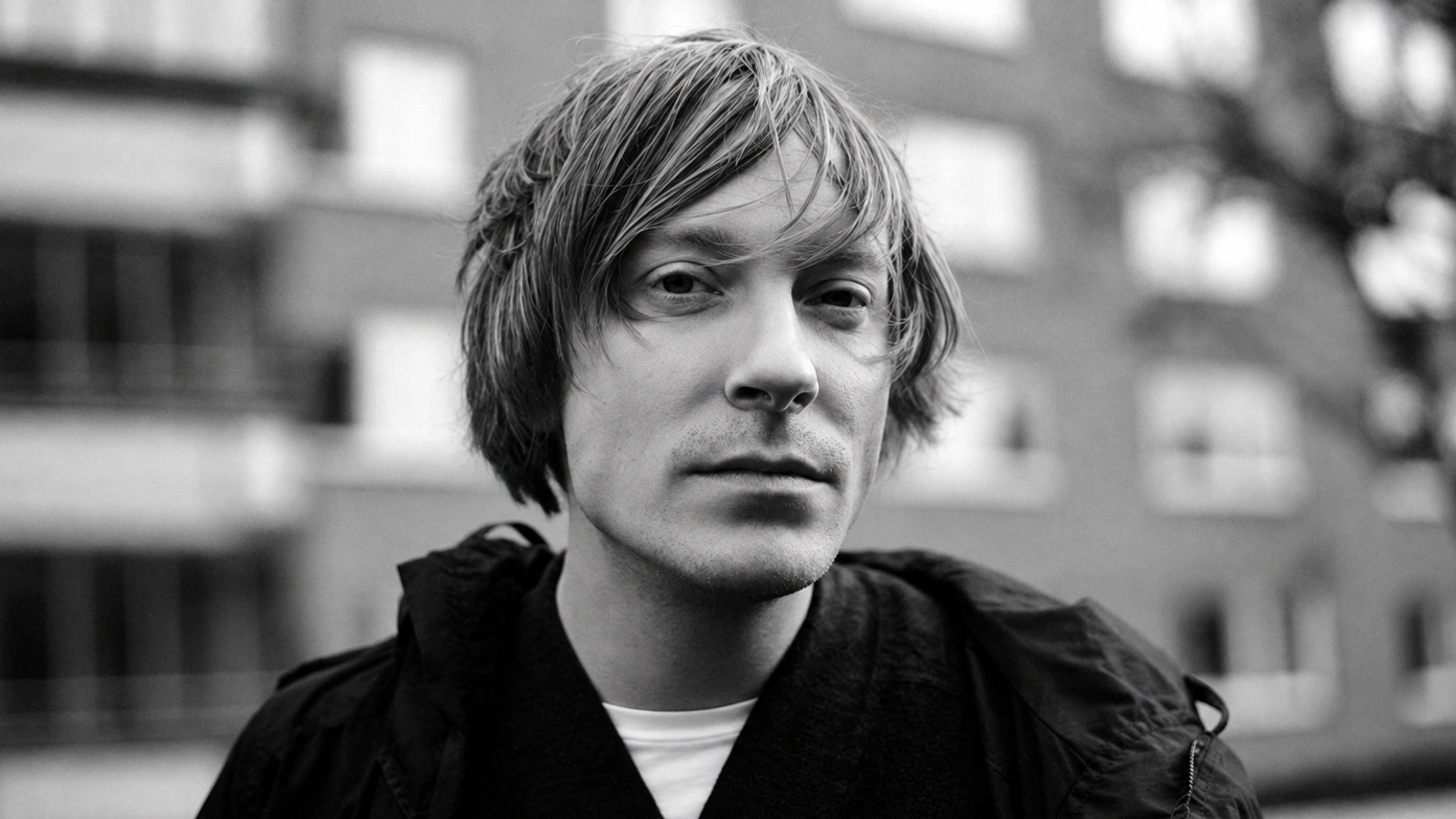
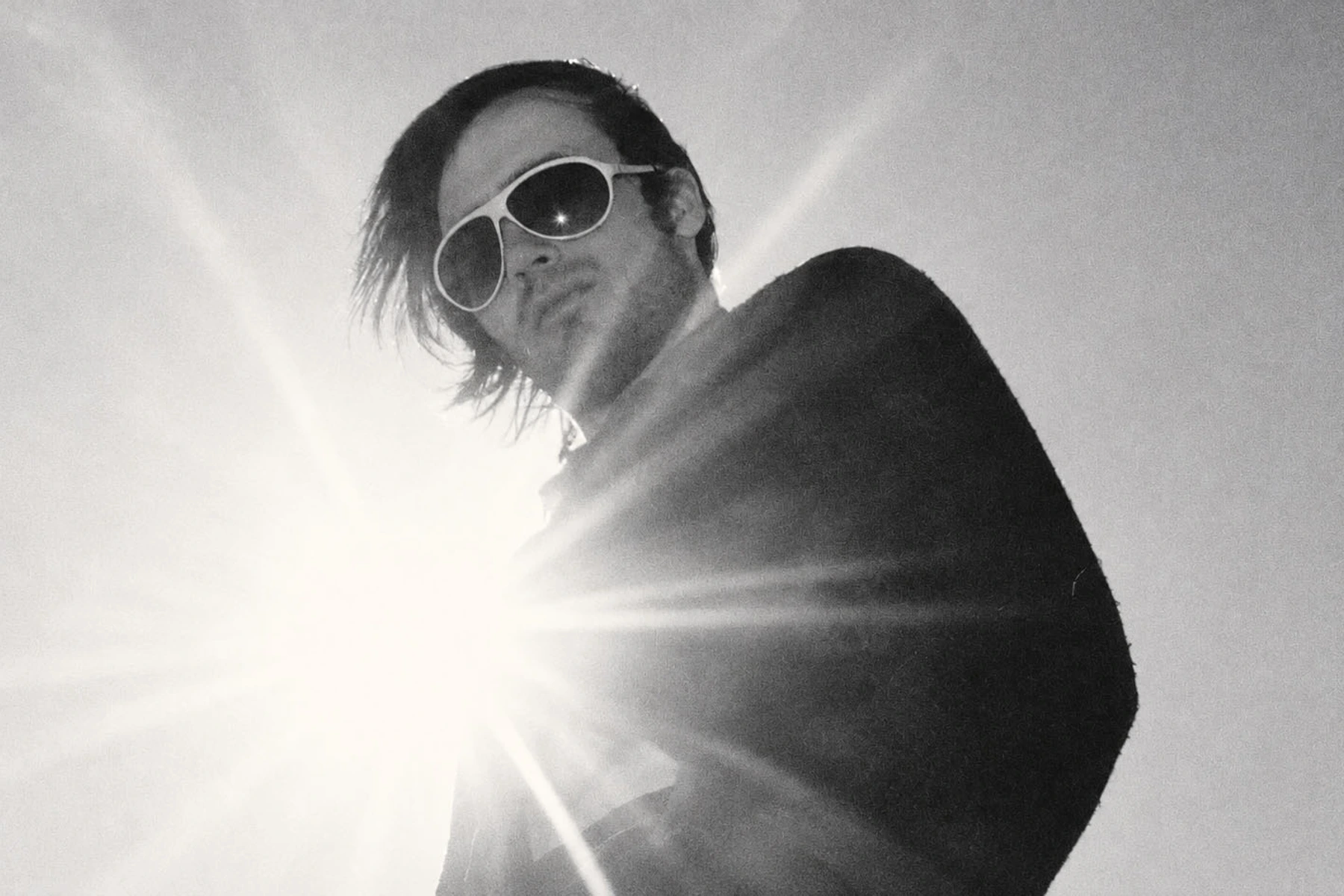
Sean Piñeiro, who records as Emra Grid, grew up in southwest Virginia. He left anthropology studies in Utrecht for New York, initially intending to become a jazz pianist, then studying composition instead. Barcelona and Berlin followed. His music has travelled with him, carrying traces of what he listened to and worked with in each place.
Before Emra Grid, there was Saved Once Twice, released under his own name by Ki Records in 2014. Its samples drew on films, cartoons and music from well beyond electronic production. The record took shape across Brooklyn, Barcelona and Berlin; one piece, “Reaper”, was made in a Brooklyn closet because that was the space available for a studio. That early habit of making something personal from borrowed fragments is worth remembering here. More than a decade later, his Secret Thirteen mix takes it into an unusually expansive form.
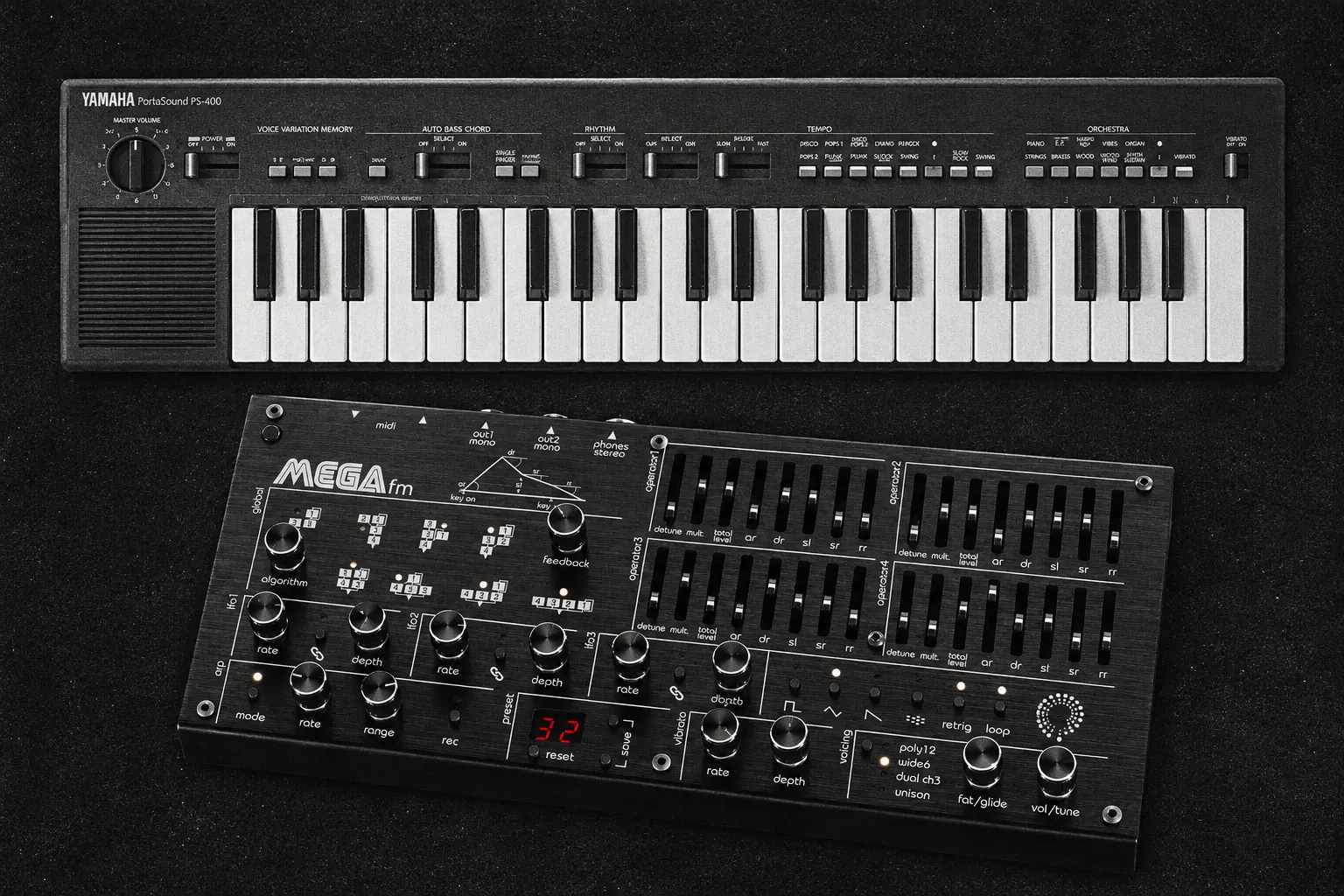
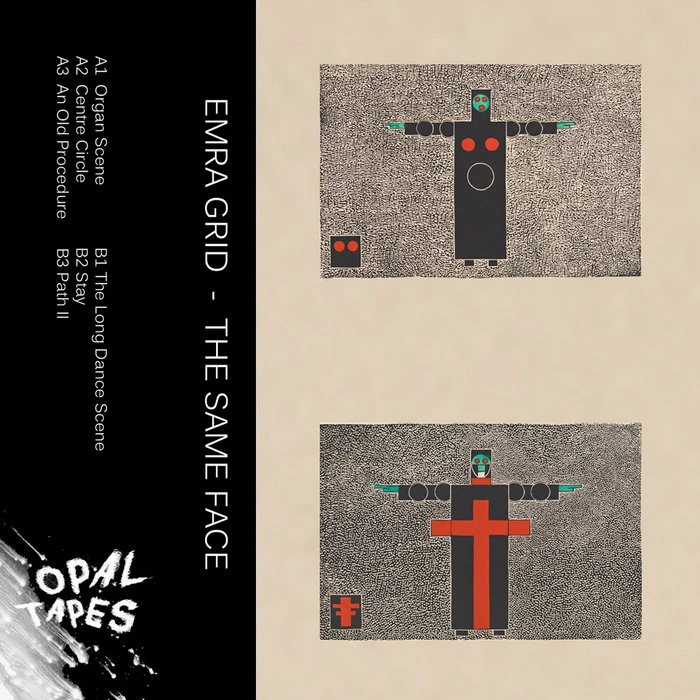
The Emra Grid name appeared on Opal Tapes with The Same Face in 2016. Records for LINE, Schematic and Banned In Vegas followed, alongside a continuing relationship with Opal. More recently, Mente was composed and mixed in Barcelona in 2025. Eleven Finns, released by LINE in April 2026, was also made there. Its credits contain two telling details: the title piece grew around recordings of a circuit-bent Yamaha PortaSound PS-400, while “Alway Season” was made entirely with a broken MEGAfm MKII. Even before getting to the mix, there is a sense of someone interested in what happens when an instrument stops behaving as expected.
From Opal to LINE
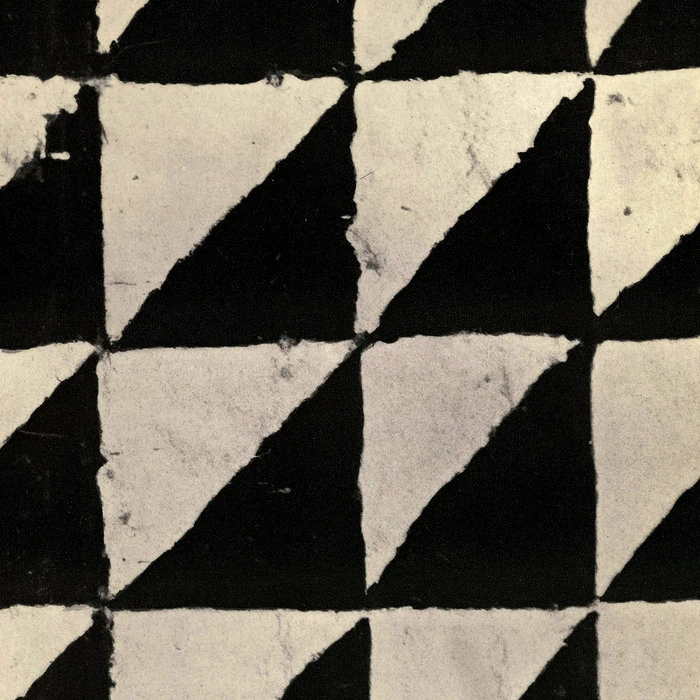
Two points in Sean’s own catalogue.
Free jazz in another dimension
On the first listen, I kept losing any sense of what era I was in. Flutes, voices and percussion seemed to come from somewhere very far away, then an electronic texture would bend the whole scene out of shape. At one point I imagined flooded tunnels opening into a lonely bar in a noir film, its piano sounding slightly wrong. A trace of the old Blade Runner atmosphere would appear, then give way to something closer to Robert Gardner’s Forest of Bliss, where the sounds of everyday life and ritual carry the film. These were pictures forming in my head. The mix kept giving me enough to recognise something, then taking it somewhere I hadn’t expected.
I wrote to Sean before seeing his tracklist. “Free jazz in another dimension” was the closest I could get to parts of it. There was something in the breath, the distortion and those strange spatial effects that made familiar instruments feel newly unfamiliar. Almost seventy-two minutes passed this way. For all the changes in scale and mood, I never felt the story coming apart.
That sense of continuity took work. Sean has brought together a selection that reaches from Rahsaan Roland Kirk and recordings of Kuria flute playing to Geinoh Yamashirogumi, KADAPAT and Shackleton. But the list only begins to explain what happens here. He loops and processes the recordings, brings them back in fragments and threads his own music through the gaps. Some of those gaps disappear altogether.
“I wanted the mix to have a section, or a few sections, with several tracks playing simultaneously without being able to distinguish them, or just create something new, treating each track like a stem of a track.”
Sean Piñeiro / Emra Grid
His notes give sixty-six entries, including returning passages, film dialogue and eleven separate appearances of his synths. There are stretches where several sources occupy the same minutes. Looking at the timings after listening is a small shock. Something that seemed to belong to one recording turns out to have arrived from another, while a third has been underneath it for a while. The tracklist becomes a way of going back into the sound and hearing the construction differently.
We had talked about this approach months before the mix arrived. Sean described working on a mix much as he would work on a track, changing the audio, looping it, stretching it and adding his own sounds. He spent more than a month thinking about this one and gathering material before assembling it over roughly a week. Some decisions were already very clear. He wanted flute music, percussion and field recordings. He wanted the pan flute from Ennio Morricone’s “Childhood Memories” to keep looping. He also wanted Kirk, heavily distorted.
“I’ve been collecting jazz vinyl since I was a teenager, and almost every time I get to make a mix, I take the chance to throw some in. Rahsaan Roland Kirk is the man.”
Sean Piñeiro / Emra Grid
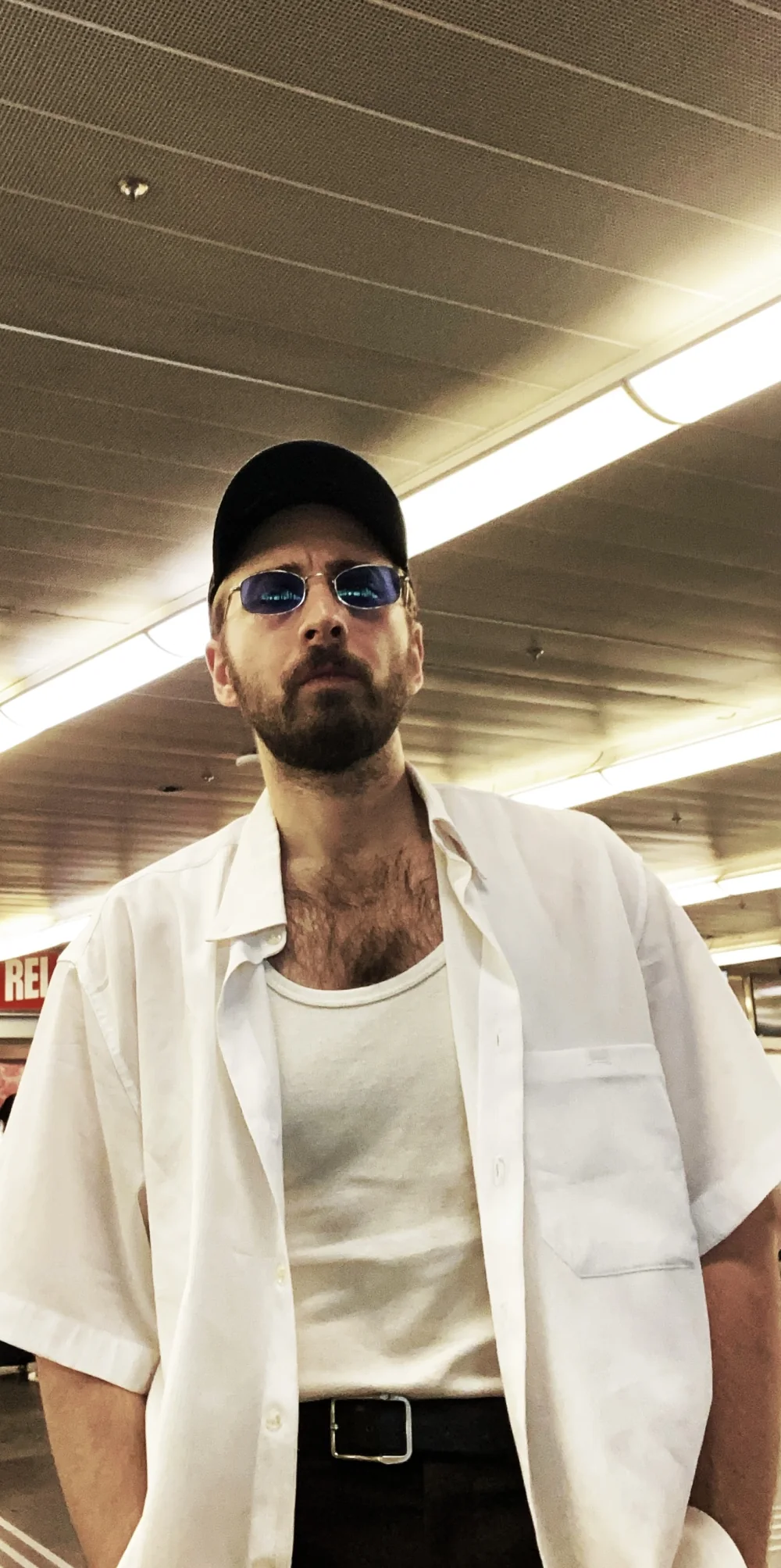
The original idea involved Kirk playing two saxophones at once. Going through his records led Sean to keep adding more. “The Inflated Tear” returns, “Rahsaanic” and “I Loves You Porgy” enter the early part of the mix, and fragments of “Mary McLeod Bethune” surface later. Alongside Chico Hamilton, Randy Weston and Bendik Giske, these passages give my first impression of displaced jazz some recognisable names. Kirk also gives the selection a personal history. This is music Sean has spent years collecting, now pulled into the same working space as his own synth recordings.
His relationship with jazz also reaches back to teenage trips to New York with friends. Seeing Mingus Dynasty left him with a feeling he wanted in this mix, a controlled chaos that seems on the verge of coming apart before it comes together again. He points to The Black Saint and the Sinner Lady as an example of that tension.
There is an older story that makes me smile in this context. In a 2014 selection for HHV, Sean recalled playing Morton Feldman’s “Slow Waltz” in a Brooklyn bar when a listener threatened to pour beer over his computer. Sean himself had needed repeated listens to find his way into the piece. In the same selection he discussed jazz, Meredith Monk and Eduard Artemyev’s film music. Those interests have had a long time to grow into one another.
Breath is one of the things I keep following through it. Ron Korb’s “Song of Sunda” appears near the beginning, overlapping “Pressure Chords – A” by John McCowen with Lucy Railton and Weston Olencki. Later come two different recordings of “Umwere (Closed Transverse Flute)” from Music of Kuria and the Gusii of Western Kenya, and a brief passage of T. R. Mahalingam. Those flute sounds connect with the saxophones in the ear, even as the recordings retain their very different histories. Distortion and repetition make their edges harder to place. A sound can feel intimate and physically close, then seem to be coming from deep inside some impossible room.
Voices that return
There are human voices to follow too. Dialogue from Days of Heaven and Dark City keeps returning. Sean traces his wish to sample Linda Manz’s narration from Days of Heaven back to watching the film more than fifteen years ago. He hears narration like this, or the voices in Sans Soleil and A Clockwork Orange, almost as poetry, a character in its own right. Dark City enters for a different reason. For him its science-fiction film noir belongs with the sound world of the selection.
Voices and cinema were already part of his own records. “A Platform”, released by Opal in 2020, was built around a reading of Sylvia Plath’s “Tulips”. How To Replace Personal Growth, his 2022 release for Banned In Vegas, took its inspiration from Todd Haynes’s Safe. “The Great Manipulator”, which appears later in this mix, comes from that record. The film references here extend a conversation he has been having in his own work for years.
Film and moving images
Two releases discussed in the article; only the numbered passages appear in this mix.
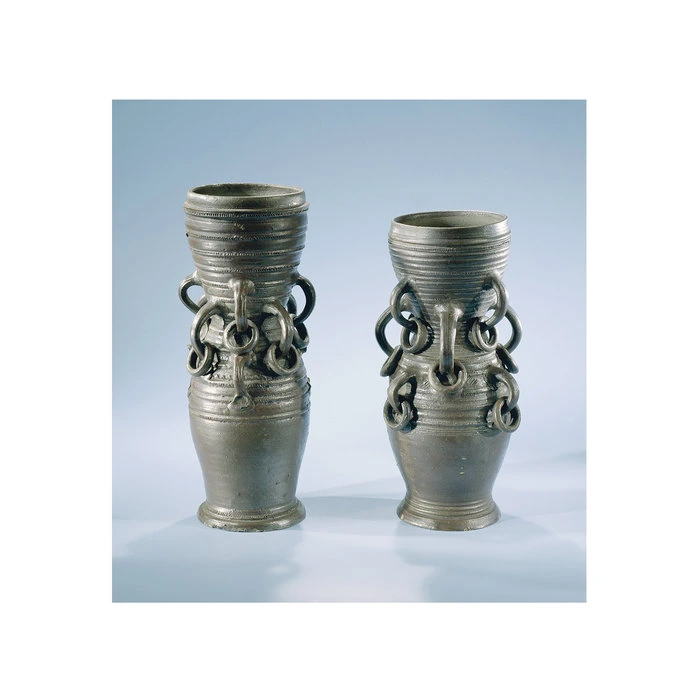
The opening choral piece by Georgy Sviridov was one of his last decisions. Sean wanted a different musical setting behind the Days of Heaven voice each time it appeared. He had already closed the mix with Sviridov before deciding to open it with the same music. The recurring voices, including Mary McLeod Bethune from a Rahsaan Roland Kirk record, gave him the sense of moving between rooms in the same building. The final choice, he stresses, was intuitive.
That detail explains something I felt throughout the listen. A familiar voice doesn’t necessarily bring us back to familiar ground. By the time it returns, the music around it has altered the mood. The speaker is recognisable, but the scene has changed. The film fragments give us a recurring human presence without fixing all these sounds to one story already told elsewhere.
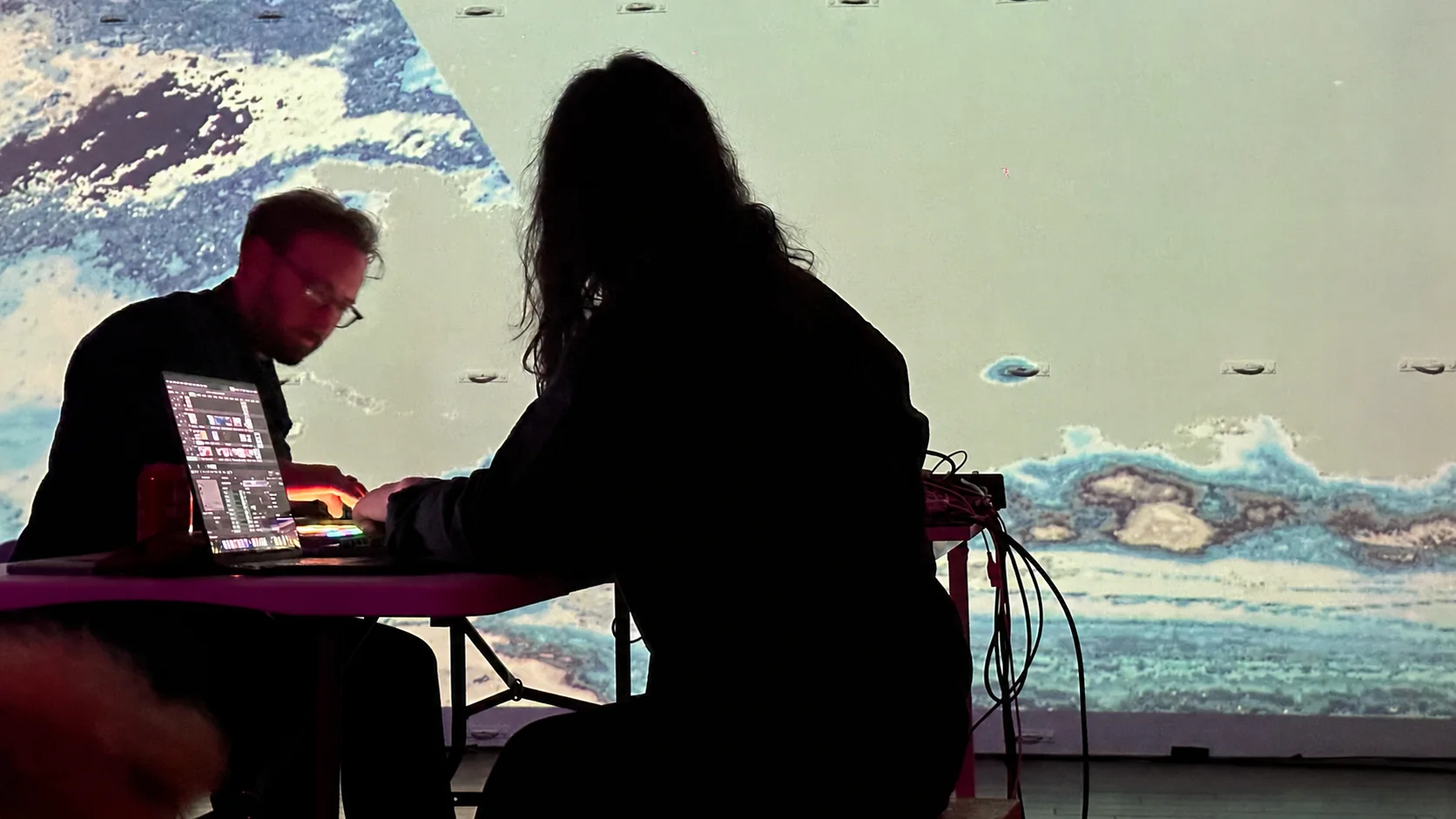
Music carried from Jogja
Indonesia is a more concrete point of connection. Sean lived in Jogja for two or three years, an experience he says changed his view of music forever. His “the river race” comes from Five Cycles Through an Empty Chamber, made during his first weeks in Yogyakarta in spring 2020. “seneca” appears on Threatening Omens in the Clouds, also written and recorded there. Both enter a stretch of the mix that includes KADAPAT, Ossia and David Edren’s “Karawitan”.
Seeing Senyawa in Berlin helped him choose Yogyakarta. Once there, the music was also part of daily life. He remembers pulling over while cycling to listen to gamelan, and children drumming through the streets at four in the morning during Ramadhan. Alongside encountering Senyawa and Raja Kirik in their hometown, those everyday sounds stayed with him.
His time there also produced a collaboration with Thomas Henning, who worked with him on a video for every track of Extended Preservation, released by Schematic in December 2021. Sean has been sharing those videos on Instagram, revisiting a part of his work that had not previously had much room to be seen. The connection between sound and moving images runs through his practice well beyond this selection.
Edren’s Electronic Gamelan Music approaches its inspiration through electronic sequencing, with patterns whose timing can be varied. He describes the work as an impression of that inspiration rather than a representation of traditional music. Placed near Sean’s recordings from his years in Jogja, it opens another route through a musical interest that has become part of his life. Sean knew before starting that Indonesian music would have a substantial place here.
Much later, “Kaneda” from Akira makes that connection audible again. I recognised the soundtrack on my first listen, but Sean’s explanation gives its placement another significance. He chose it as a deliberate return to the Indonesian music heard earlier, pointing to the Balinese jegog in its sound. What first felt like a sudden opening into an anime world was also a connection running back through the mix. His own “a faint glow” begins before “Kaneda” has finished, carrying that passage into his music.
Recordings from Yogyakarta
Follow these two releases back from the layers in the mix.
The field recordings matter to this construction as much as the more immediately recognisable pieces. There are the Kuria flute recordings, Groupe Folklorique Temaeva, and a New Year prayer recorded in San Pablo Chalchihuitán, Chiapas. Sean identifies 39:33–48:08 as one of the sections where he tries to make something new from several different recordings, using the prayer to hold them together.
His account makes the layers more tangible. He takes only a small passage of bells or chimes from 2562, while Giske, percussion and his synths occupy the same space. He recalls adding Mustapha Tettey Addy’s “Dum-Tititi, Dum-Titi” and distorting it until it sounded like a motor about to blow up. Distortion and granulators recur throughout the mix. He gives the looping and mangling of Morricone’s pan flute at 07:33–08:34 as another example. The credits let us follow those sounds back to the people and places behind them once the mix has carried us elsewhere.
An ending found by listening
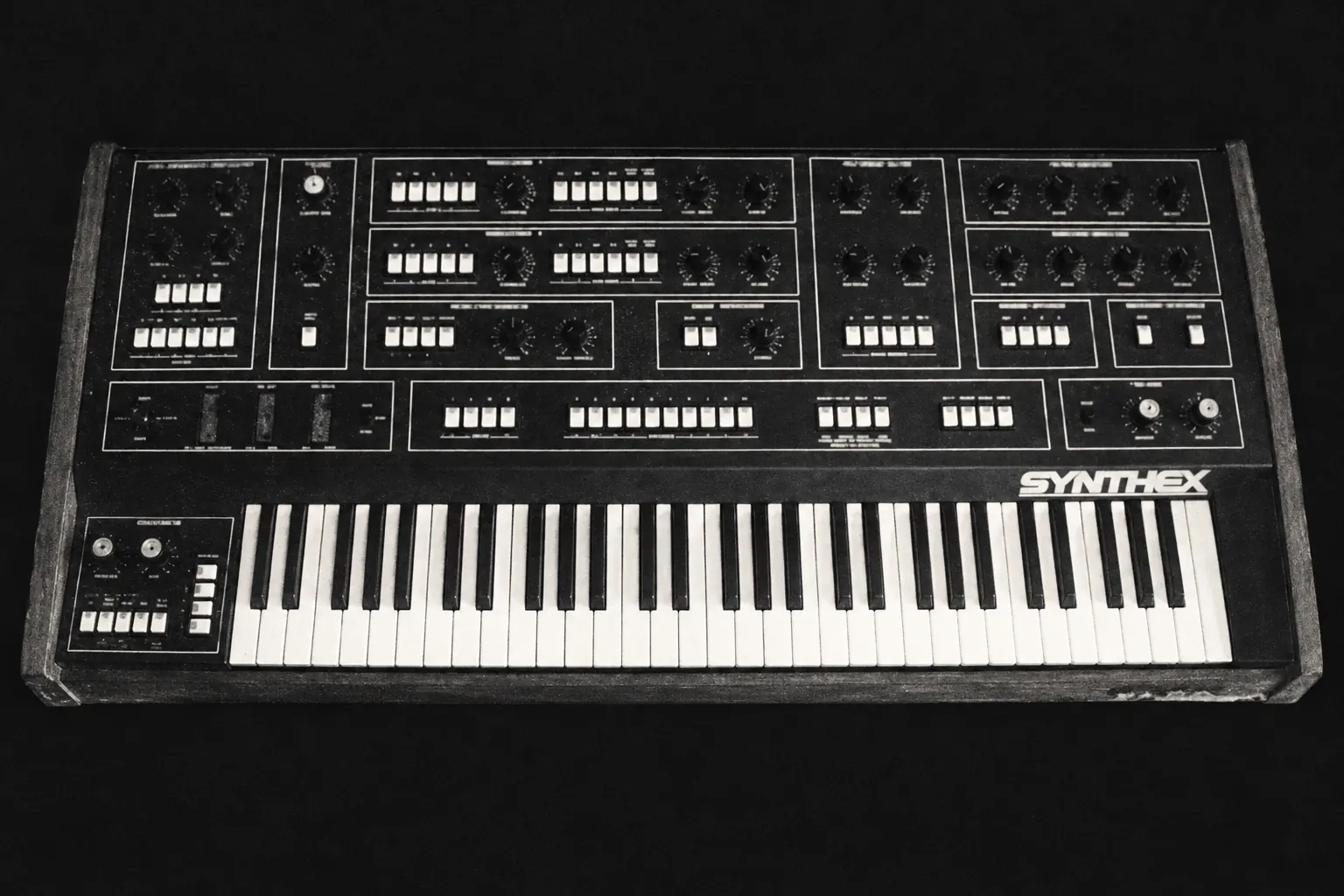
The difficult part, Sean says, was finding room for the ambient music. He worried about how it would sit with the percussion, flutes and jazz. His own synth recordings helped hold these different materials together. They were made mostly on a friend’s 1980s Elka Synthex in Berlin, recorded for future sampling; many of them also went into Extended Preservation.
“SALA” and “Reaching the Tall Grass” form long overlapping passages near the middle, with film voices and additional synths passing through them. “SALA” samples the same Morricone album as “Childhood Memories”, a connection Sean thinks would be hard to hear without being told. He made “Reaching the Tall Grass” around the same time as the mix and feels the two are tied together. Here we hear his composition taking shape alongside his listening.
There was also an earlier ending. After three days of working on the mix, Sean thought he had finished with “The Great Manipulator”, around the point that now falls just before “Kaneda”. A couple of days of listening convinced him something was missing. He wanted to move further into contemporary electronic production while keeping contact with the sounds already introduced.
He kept returning to 2562’s “Jerash Hekwerken” and Shackleton’s “Crushing Realities”. Their raw percussion suggested hand drumming to him, and the title of the Shackleton piece connected with Dark City. His own “Sat Cue Forminant”, forthcoming on Adepta Editions alongside “Reaching the Tall Grass”, found its place in that company. The final stretch came from listening again and recognising that there was still somewhere to go.
Sean first discovered Secret Thirteen after moving to Berlin in 2012, around the time he began making ambient music. He told me that contributing a mix had been on his mind for years. When it finally arrived, he thanked me for leaving the deadline open. Hearing about the month of preparation, the abandoned ending and the extra days spent listening back, I’m glad we did.
Max Ernst’s The Eye of Silence comes to mind here. Its rocks, plants and architectural fragments seem to grow from the same surface, forms Ernst drew out of transferred paint textures. Sean’s loops and processed recordings do something similar. Voices and instruments retain traces of where they came from, while the landscape around them keeps changing.
By the time Sviridov returns, that first voice has travelled through several different musical settings. I recognise the beginning, but my head is full of everything that has happened in between. There are records I want to hear on their own and passages I want to take apart with the tracklist beside me. For now, I keep going back to the whole thing. The strange part is how familiar it starts to feel without becoming any easier to place.
Sources and image credits
- Text: Justinas Mikulskis, from his listening notes and October 2026 correspondence with Sean Piñeiro.
- Artist photographs supplied by Emra Grid. Live photograph: narrow left-edge wall strip retouched with AI assistance; original retained. Chrome/scanner artwork: Secret Thirteen, with AI-assisted adaptation.
- Earlier biography and the Feldman anecdote: Sean Piñeiro / 10 Favourites, HHV, 10 June 2014.
- Early release context: Saved Once Twice / Ki Records description.
- The flute recordings: Music of Kuria and the Gusii of Western Kenya / Smithsonian Folkways.
- The Chiapas prayer: Modern Mayan / Smithsonian Folkways.
- Electronic sequencing and gamelan: David Edren / Electronic Gamelan Music.
- Original release artwork: Emra Grid — The Same Face.
- Original release artwork: Emra Grid — Eleven Finns.
- Original release artwork: Emra Grid — Five Cycles Through an Empty Chamber.
- Original release artwork: Emra Grid — Threatening Omens in the Clouds.
- Original release artwork: Emra Grid — How To Replace Personal Growth.
- Original release artwork: Emra Grid — Extended Preservation.
- Instrument illustration source: Yamaha PS-400 official photograph. Monochrome instrument studies and compositing by Secret Thirteen, with AI assistance; reference models rather than the artist’s own units..
- MEGAfm MKII reference: Twisted Electrons / current MEGAfm II product photograph..
- Elka Synthex reference: Photograph by Matt Friedman, CC BY 3.0. AI-assisted background and monochrome print adaptation by Secret Thirteen..
- Elka source photograph license: Creative Commons Attribution 3.0..