Interview
Paper Dollhouse Between Dream and Reality
Astrud Steehouder and Nina Bosnic on rural landscapes, urban romanticism and the images inside their music. A conversation about folklore, MoonDome and the physical worlds built around a recording.
Read the conversation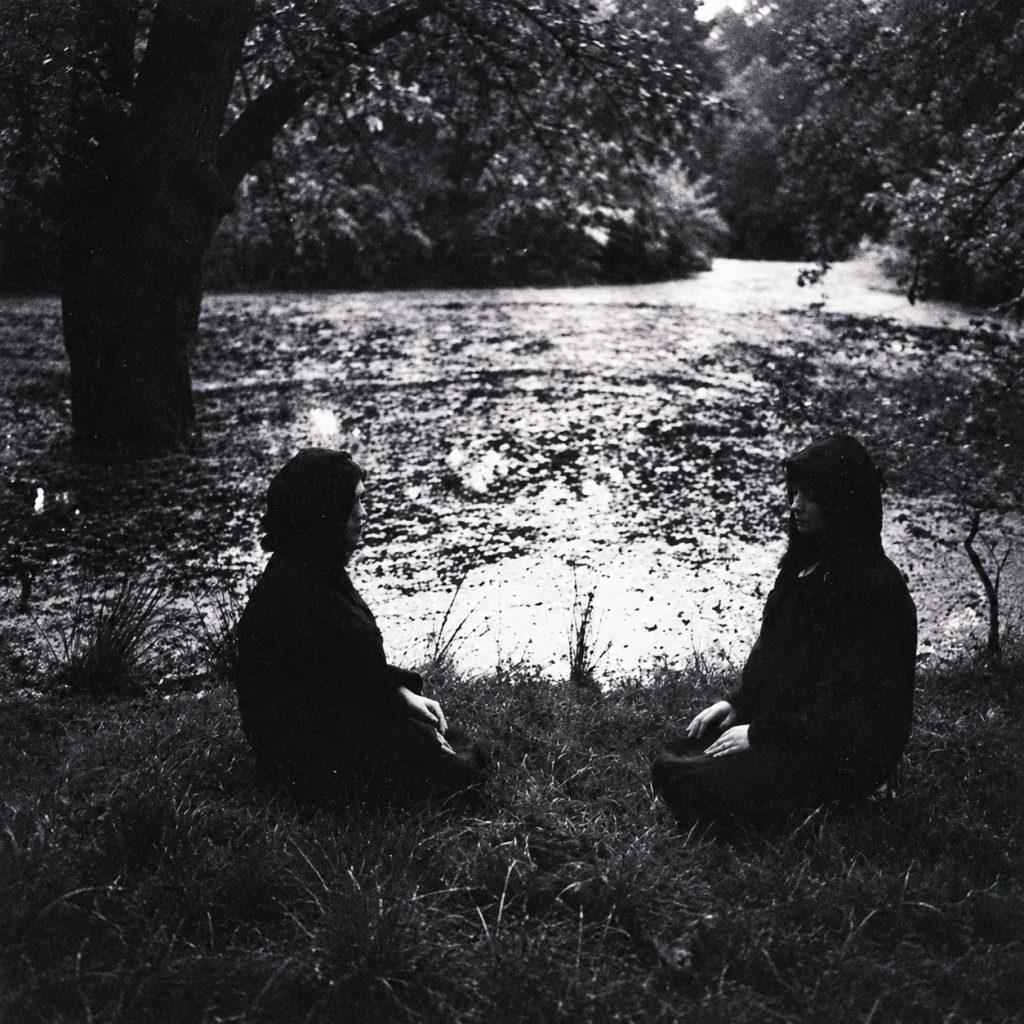
Astrud and Nina of Paper Dollhouse speak about the diverse aspects of their charming aesthetics and shed some light on their creative approach.
There was quite a lot going on recently on Secret Thirteen in relation to Paper Dollhouse (a mix and a review), thus the duo of Astrud Steehouder and Nina Bosnic probably needs no formal introduction. Their sound unites the mysterious charm of rural landscapes with elegant urban romanticism and lush synth textures. At times you can imagine it coming from an imaginary place, where Peak District and Detroit are merged into one, or like a possible collaboration between BBC Radiophonic Workshop at their most romantic – dreamy Linda Perhacs tunes and Juan Atkins’ Cybotron. The cinematic playfulness, surreal grace and subtle traces of techno coexist in Paper Dollhouse’s music.
One of my fondest memories associated with this act is listening to their “Swans” track while driving through the dense Lithuanian woodland, with pines framing the narrow country road. It resonated perfectly with the atmosphere visually and sonically. “Swans” is without a doubt a flawless and mesmerizing attempt at creating an otherworldly pop song, a breezy and lush celebration of nature. The subsequent Aeonflower release flirted with much darker, more nocturnal undertones, yet still retained the mellow sensibilities embedded in these sounds.
The 1988 film Paperhouse partially encapsulates the essence of the project – the combination of surreal fairytale, light horror, hauntological atmospheres set in the beautiful Devon landscape that certainly brings to mind the magical soundscapes of Paper Dollhouse whether it be their twilight-veiled synth pop, folkish experiments, haunted rave reminiscences or sunlit ambience. In the interview below Astrud and Nina shed some more light on their present and future prospects, creative impulses, their approach and other aspects of their magical soundworld.
01The city and its invisible folklore
You live in London, yet your music is filled with dream-like rural otherworldliness. How does the city affect you? What is your relation to it?
The Paper Dollhouse recordings began in my old house in East London between the kitchen and garden, but with a conscious recognition of often magical, unsettling or uncanny bucolic settings depicted in some films and TV programmes and books I’d seen or read in childhood, like “Z for Zacharia”, “Midnight Blue” and “Paperhouse”, where the tone and atmosphere occupied a liminal space between dream and reality. They offered a spectral realm between something real, industrial, nuclear, everyday, and a projection into the imagination. I got into Derek Jarman very much, his understanding of London in all its tarnished murk, but with a shimmering, jewelled beauty that’s there if you look through the greyness and din. The invisible folklore of the city.
Even though A Box Painted Black and Aeonflower were both mainly recorded in London, we were always drawn to natural sounds as much as mechanical ones. Birds and water have always somehow been present amongst the drone of aeroplanes and sirens. Like dream and waking worlds, one cannot exist without the other. I no longer live in the city. I moved to rural Suffolk a year and a half ago and this shift has fed into the music. We spent a lot of time roaming the fields and coast, recording in the cottage and outside and developing ideas inspired by folklore, local history and the natural world. The rawness of the landscape and organic found sounds inform and twist our ideas and expand the sonic spectrum.
Does the intense pace of London correlate with your creative endeavours? There seems to be a strange dichotomy between urban (recent tapes) and rustic (Devon Folklore Tapes Vol. 1, A Box Painted Black) influences in your music. Where does that come from and how do you feel the environment affects you?
There is. The pace of the city is what I’m used to. I was born in London and feel close to the heart of the city. I was always fascinated by Soho as a child. Musically, I feel like I grew up with a lot of music that felt unequivocally borne out of London and certain aspects of the London club scene. But the folklore element is really important, the peace and ancient tales, hills, countryside and trees, talking and dreaming in a different way in fresh air with bird sounds and water running. A large part of the new album was recorded in Suffolk and is filled with these atmospheres. It’s in part a meditation on the city and the country and how both are portals of imagination and freedom.
I first encountered you via the Folklore Tapes’ release. What attracted you towards Devon folklore and topography? Do you have some special personal relation to this region?
No, but that was part of the interest, in researching stories about the weird fabric of tales built to explain certain experiences, marking traditions and learning about mythologies connected to the region. Mainly we were really interested by David’s (David Chatton Barker of Folklore Tapes) style and sincerity in exploring these tales in a very authentic way. Nina and I chose the subject of ritual and were able to construct experiences like burning coloured smoke at dawn and making recordings in a cemetery in a meditative state as a response to the theme. It was a really personal take on it, but we read about Devon Folklore in parallel and the recordings developed a certain gravitas as we repeated the words of the stories like chants alongside our own explorations.
It was a magical way of working and creating sounds, channelling into something deep and historical which we felt connected people and lives through temporal portals. The experience has enriched the way we think about history and the sense of place and how we can feed these ideas into the music. It became as much about states and specific experiences we went through as the actual sounds.
02MoonDome and physical artefacts
You released your records on a few notable labels namely Folklore Tapes, Bird Records, Night School. What was the reason for starting the MoonDome label that you run with your colleague Luke?
Mainly as a conduit to release bedroom recordings independently that didn’t make sense to release on the albums proper and to shed some light on some of the more instrumental and electronic work that was in development. Some were unreleased tracks that I felt held their own and felt precious in their own way.
Your records resemble small physical artifacts (the book-binded Folklore Tapes release, tape with mood ring and photo prints included etc). Why is this aspect important to you and could you elaborate on the visual approach behind your releases?
For MoonDome I had a really specific pretty sci-fi and slightly industrial aesthetic with the black and white prints and artwork but I liked the novelty aspect of an extra element with a coloured cassette. It seemed to make sense with a tape release set up that didn’t for vinyl. I’ve always liked toys and weird objects; my room is littered with oddities like viewfinders and crystal balls, glow in the dark stuff, so that element is fun for me.
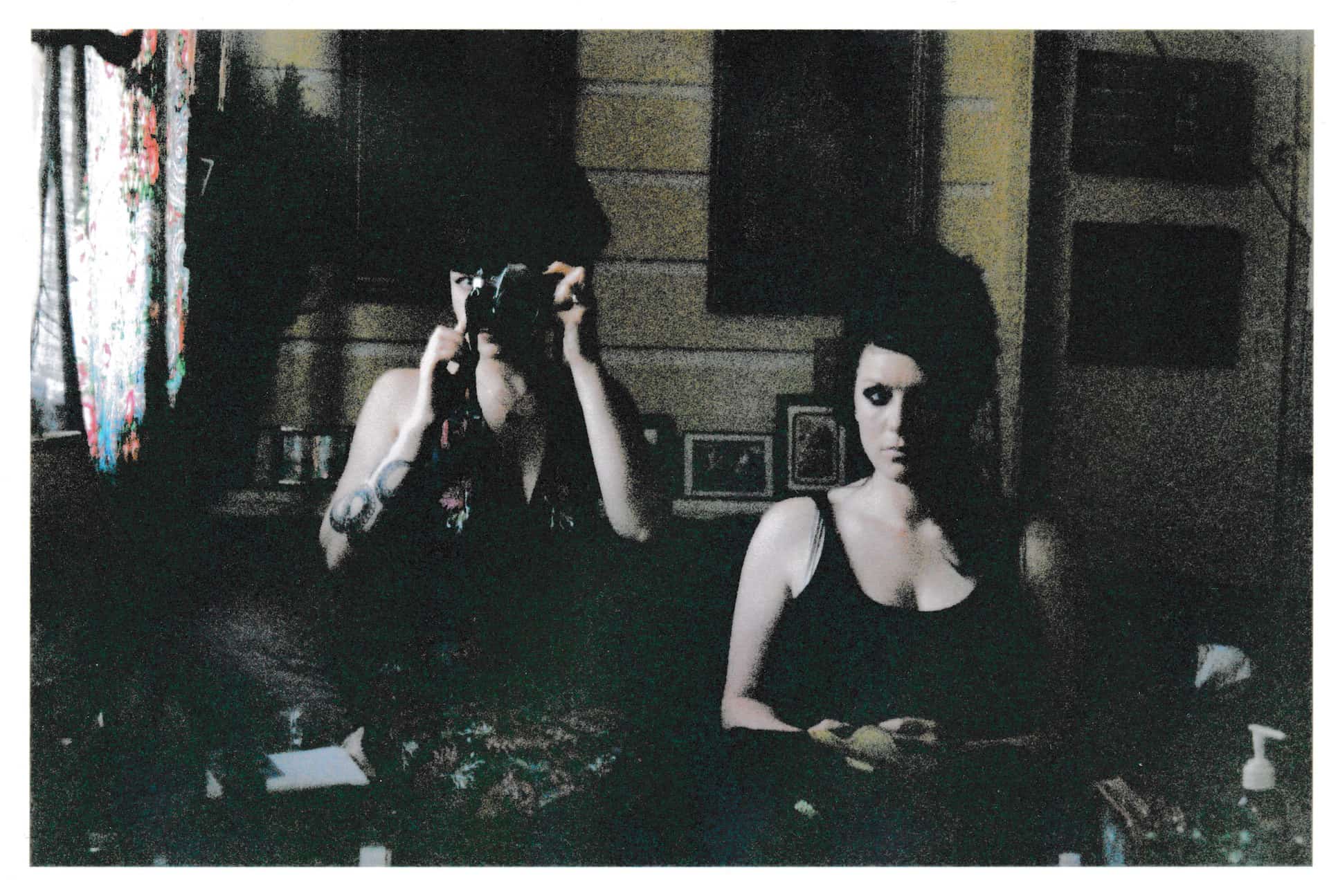
For me the visuals and artwork are just as important as the music. Everything comes from us and everything visual is deeply connected to the music. The cover artwork on Aeonflower came from a film we made in Astrud’s garden during the recording of the album. Subconsciously those visual ideas formed a part of the whole.
03Dreams and other worlds
I find that the balance between synths, lush techno elements and folk-music feels very organic in your music. Why do you think that is? Do you create these sounds simultaneously or going through creative periods? What influenced your current musical state?
I’m not a purist and get bored with one type of music but I feel a lot of the stuff I make has an icy dreamlike quality, I guess it’s generally what I’m drawn to. But it’s organic in the sense that it is just representative of a mood. Sometimes, for example with a track like “Gremlins”, I wanted to experiment with heavier sounds and a filthier jungle aesthetic so choosing to work with drum machines is a conscious thing but then it all mixes into one because I usually end up adding synths and field recordings anyway. The forthcoming album is a combination of electronic tracks, field recordings, spoken word, synths and poppier stuff. Somehow all these elements find their way in so I guess it feels complete without one of these in the mix.
Dream-states and otherworldliness seem to be quite prevalent elements in your music. Are these states you seek out actively? How do they influence you?
Not really, I think it’s pretty unconscious. I dream and think a lot and I have a short concentration span. When I’ve gone through particularly stressful periods I’ve found some of the instrumental work is the most meditative so I guess the process of making music was in some way cathartic and created a sense of internal peace.
I think the ethereal element always has and always will be present in some sense whether this is conscious or not. Channelling ideas through meditative and trance like states is a way of working that I find inspiring and productive. Almost as though getting yourself in a particular mental state is essential for creativity and progress.
As far as I know your name comes from the film Paperhouse, in which a girl creates her own haunted dreamworld by drawing an entirely different world. Do you view this as a source of escapism or is it more of a way to channel the things around you?
I think everyone has a very personal filter and style and they have the liberty to use in order to create something which is what makes the depiction of the same subject endlessly fascinating, the unique take that person has on an experience and the way they are able to project it. I think in processing a subject in order to paint it in a certain light means it goes through that filter so your mood or relationship with it will be projected onto it. A lot of the stuff we produce has a dreamlike quality which can act as a kind of capsule which infers escapism but the initial subjects can be a everyday experiences that just take on a different style when we try to express them.
04Melody, innovation and time
The 21st century is filled with retrograde musical trends. Your sound seems to stand somewhere in between several periods (or outside of any temporal period) – British folk tradition, 90’s rave, 70’s radiophonic synth as well as traces of early 2000’s IDM. What do you think it means to be innovative in the 21st century? Do you think that we lost our sense of the present and over-Glorify the past? If so, why do you think that is? Maybe 21st century is not too exciting for artists.
There are a lot of musical influences that feed into the records and I think those mentioned appear very strongly throughout. I think the choice of production methods and particular use of synths and vocals reference the styles mentioned but it’s definitely a mix. I think being innovative relies on breaking moulds and having a fresh approach to creating something. I think you can either do this with skillful use of technology or with a radical conceptual approach to making art. Maybe by mixing processes and genres, unusual collaborations, reassembling core elements of music to make something that sounds different and new. We might not recognise innovation as such initially as it’s much easier to coin a new style way after the event, when lots of people have followed or, most significantly, when we choose to identify something as a new style of music. There are a lot of artists completely pushing the boundaries of production who are very conscious of next-level production based on the most up to date technology available and building their own machines and software to make this happen. I’m fascinated by sound engineering and constantly amazed by the skill people have in this area, I have complete respect for it, but it’s not what this project is about. It’s not really about innovation as such, more a personal expression of ideas alone.
In terms of the apparent prevalence of referencing music of previous decades, we’re in an age where we are able to constantly look back to the past immediately via the internet so past genres lie hand in hand with current tracks in YouTube and Spotify mixes completely out of context. I don’t see that as problematic except if people are constantly fed the canon purported to be the Glory years of music as if it’s all been done. There’s no sense in that. I think the financial value placed on certain music over others really contributes to this and the people in control of mainstream media channels to reaffirm the idea ad nauseum. I think it’s a hugely exciting time for music, no less so than any other, partly because of the access people have to cheap or free equipment. People have the ability to create music themselves which is totally democratic. I think ambient textures of the modern age are feeding into music more and more, and due to the speed at which our concentration spans alter as we chop between different technologies, maybe we’ll eventually be able to hear white noise as a tune.
Your music encompasses abstract textures, but is also very melodic, at times almost bursting with pop sensibilities in the best possible meaning of this phrase. What do you think is the importance of melody in music? Where do you think melody stands in experimental music in an age when sound gets increasingly immersed in multilayered concepts and drowned in complicated structures?
I’m obsessed with melody. For me it’s the element I’m most naturally drawn to. I acknowledge my take on melody is more in the pop realm than experimental because it is structured with repetition and an understanding of phrase. It depends what you mean by experimental music. I think experimentation in music directly influences the way pop is produced, for example an electronic musician versed in using completely atonal sounds and textures might be producing a pop record. Pop tunes exist and resonate for a reason. The best pop songs understand the concept of simplicity, a melody we can repeat or sing or with beats, dance to. The focus will be on the most simple language to capture universal experiences and basic human emotions. To capture that in a few phrases is difficult. We need it, song has always existed in society. So the pop tracks we hear will always highlight the relationship between the technology and culture of the time, and the essence of a song. Even if the exact language and subject matter changes, what makes pop relevant is the power it has for people to identify with it.
Melody feels good and pop is fun. The pop element of the music is just as integral for us as the more difficult or unusual sounds on the other end of the spectrum. It’s about a fine balance and the freedom to draw on the things that resonate within us be they drones or melodies. It’s important not to overwork songs or be too mindful of how others might take them and to just have fun and trust the moment.
Original publication note / 2017
Paper Dollhouse’s third album, produced by Asher Levitas will be released on MoonDome in the second half of 2017
05Listen further
Paper Dollhouse
Paper Dollhouse drift between haunted melodies, ambient spaces and distant rave memories, threading their own MoonDome recordings through a luminous, dreamlike selection.
Sources and image credits
- Original interview: Paulius Ilevičius. First published 2017-05-11.
- Paper Dollhouse / Photo: Amy Hurst / Restored photograph
- Hero photograph: AI-assisted restoration / composition adaptation. Original photograph retained. Original colour or monochrome is preserved.
- Women Make Music / PRS Foundation artist archive, published 2016; photographer and capture date uncredited: Photograph source.
- Additional listening: Paper Dollhouse, Aeonflower / Night School, 2015.
- Original publication: Secret Thirteen archive.
- Paper Dollhouse / Photo: Amy Hurst / Restored editorial adaptation