Interview
Sam Kidel Bristolian Vibes and Anti-Capitalist Ambience
Sam Kidel on Bristol, the politics of ambient music and turning hold music against its intended purpose. Richard B. Keys traces the ideas and working methods behind Disruptive Muzak.
Read the conversation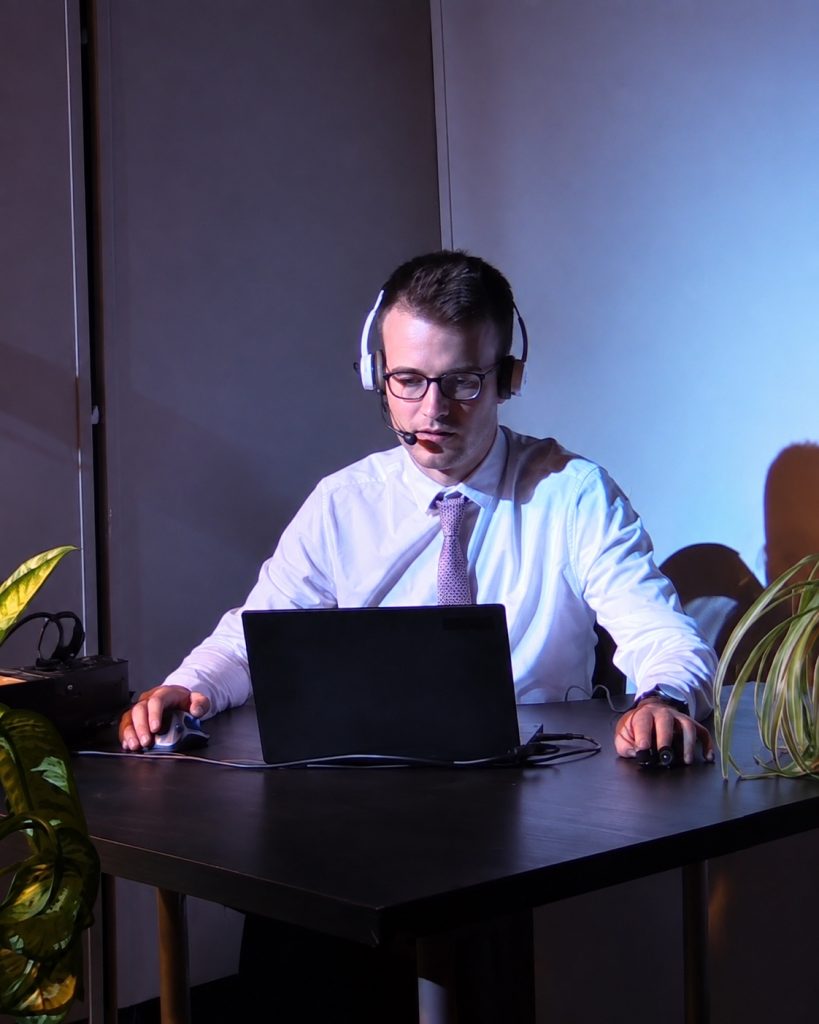
Musician and artist Sam Kidel of Young Echo and Killing Sound talks about his interest in ambient music and the texture of meaning behind it.
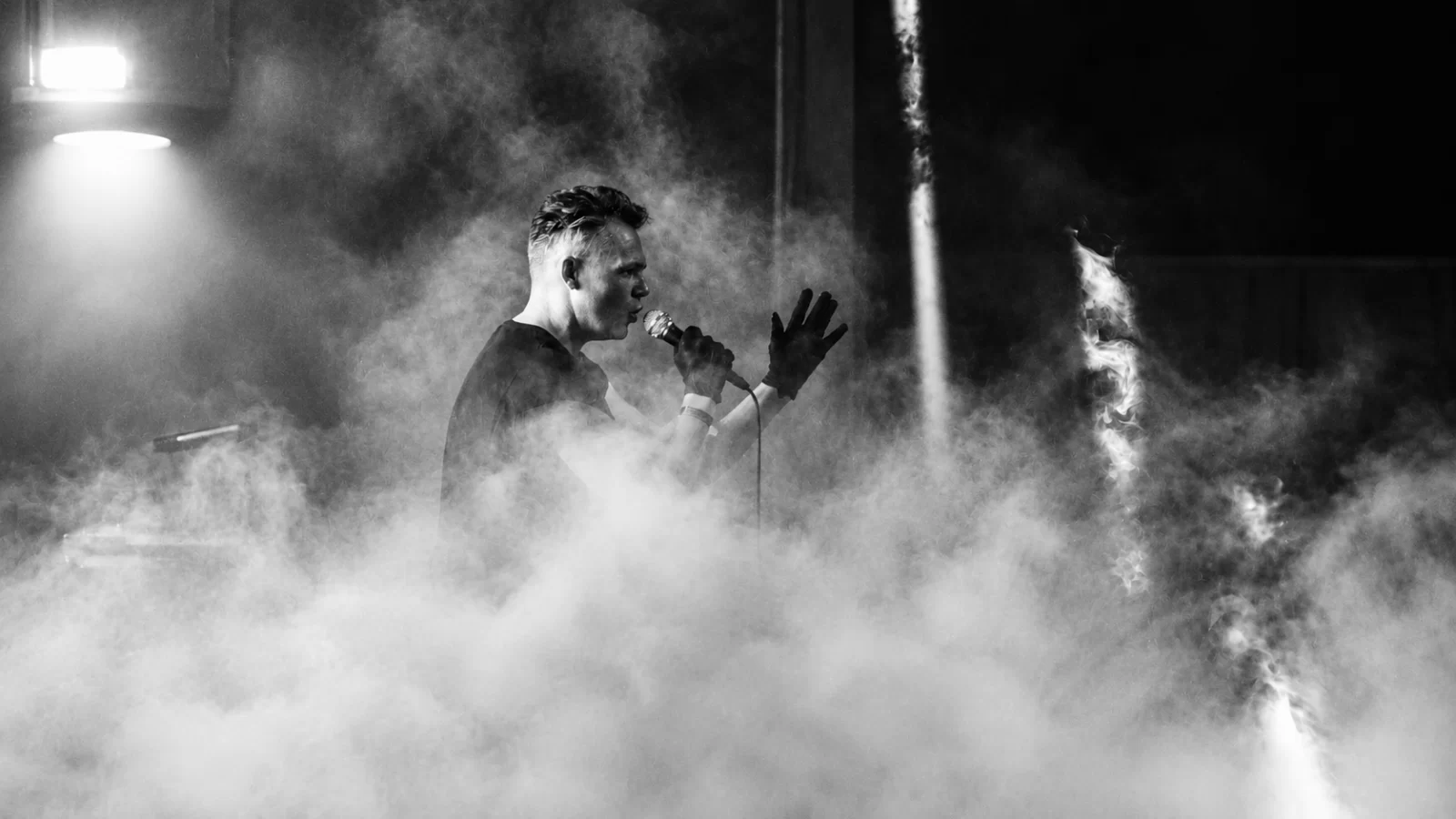
A former member of the Young Echo Collective, Sam Kidel has been a notable figure on the experimental end of Bristol’s electronic music scene in recent years. More recently he has been exploring critical approaches to ambient music, through his work with the Disruptive Muzak project, which has been realised as an installation, an acclaimed recorded album (via Death of Rave), and now a performance work. We recently had the opportunity to talk to him about his experience living in Bristol with its unique musical history, working collaboratively in the Young Echo Collective, and exploring critical approaches to ambient music.
01Bristol and working together
You grew up in Bristol, a place that has played a formative role in UK bass music. How has the city’s culture and sound influenced your work, particularly in regard to the Young Echo collective, El Kid and Killing Sound?
The city certainly has had an influence, particularly on the collaborative projects that I have been involved in. There’s a strong DIY culture and a corresponding aesthetic roughness to lots of the music being made in the city, drawing energy from punk and Jamaican soundsystem culture. That aesthetic fed Young Echo and Killing Sound, but is less obviously formative in my solo work. If I take anything enduring from the city, it’s the anarchism that drives these DIY strategies.
The Young Echo collective, of which you are a former member, works within the intersection of “dub, drone and bass music.” Collectively, you ran a regular online radio show, put on club nights, and have released an album together — Nexus. How did you function in terms of both the collaborative process and the outputs? And how has being in such a collective catalysed your own work?
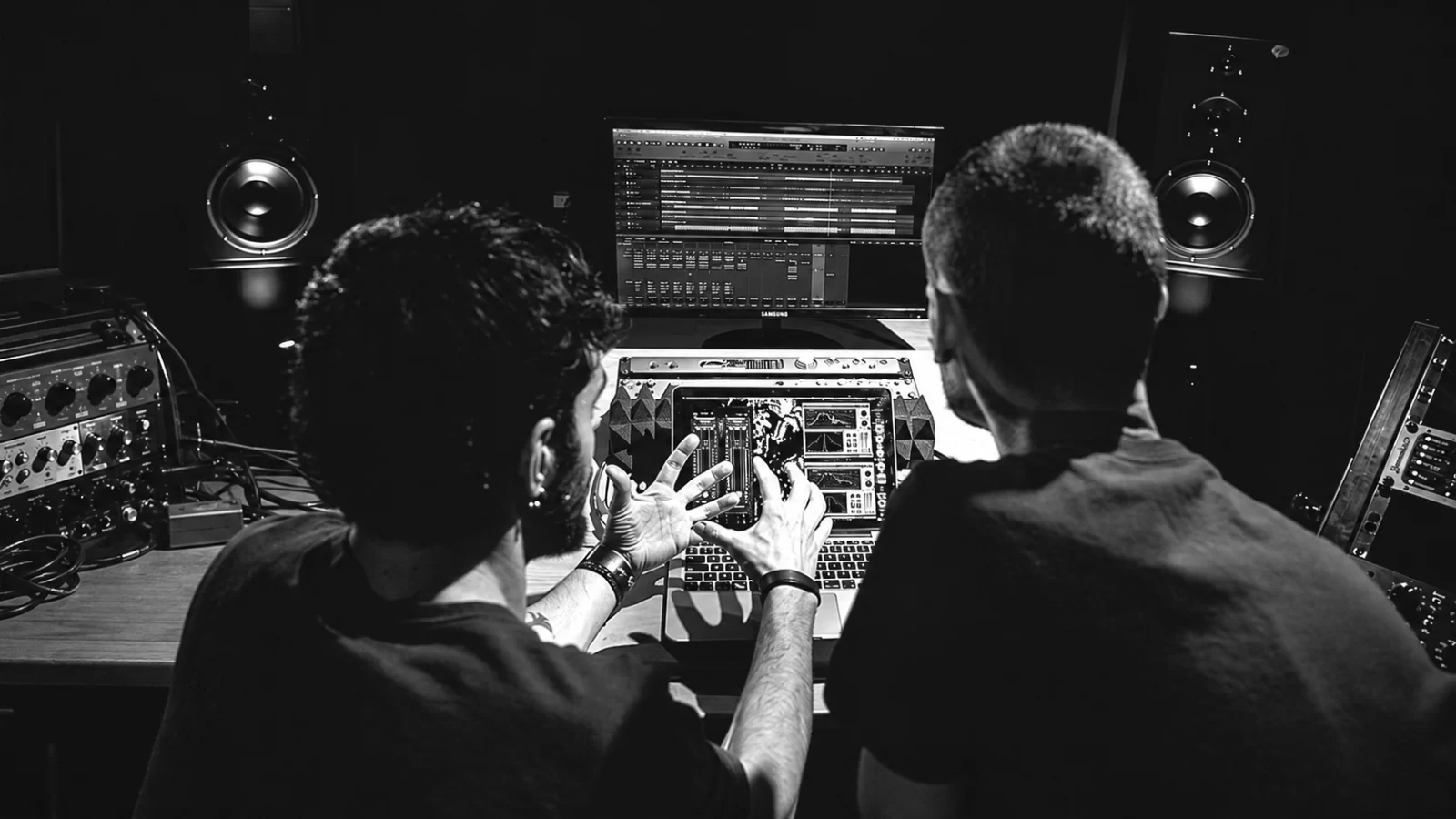
We formed Young Echo inspired by a rich history of music collectives in Bristol, particularly Skull Disco. Although we sometimes gravitated around a spacey, LoFi, psychedelic sound that is quite recognisably Bristolian (the sounds on Nexus, for example), Young Echo — particularly at radio and live events — was always about clashing sounds and ideas. There were no explicitly stated priorities or rules, except a horizontal structure and a focus on challenging each other. I’d be disappointed if that era of the group was remembered as aesthetically unified — the clashes were far more interesting to me than the shared territory. For a while those clashes were productive and inspiring, but eventually that changed. The conflicts shifted slowly from productive frictions into ethical impasses. I love collaborative work, and I learned a huge amount through Young Echo, but eventually it became clear that my ideals for the group were at odds with other members, so I left!
02The politics of the ambient zone
Your recent work has engaged aesthetically, musically and conceptually with ambient music (and Muzak): from the Politics of Ambience conference you were involved in organising, to some of your recent mixes (such as the Telepathic Fish mix for Vice), and your Disruptive Muzak album. What is your particular interest in Ambient Music as a genre and as an approach more broadly?
I’ve always listened to a lot of Ambient Music. I’m an anxious introvert, so I’ve found it a useful tool for healing. As I’ve reflected on the genre and the various listening practices associated with it, I’ve become fascinated by the political impulses of its various forms: from the radical intentions of Walter Olmo (thanks to Lola San Martin Arbide for alerting me to this), through the adaptation of corporate Muzak by Brian Eno, to the communitarian ideals of chill out rooms at raves and the later isolationist impulses of ‘dark ambient’ producers. I think these moments of listening — alone or with other people — have a significant impact on our felt sense of the world, our relationship with others, and our priorities.
Historically the ‘ambient zone’ was a key part of the sonic and spatial architecture of rave culture. The ambient zone (or ‘chillout zone’) served as respite from the high energy and enforced euphoria of the main zone, whilst also providing a space for psycho-acoustic exploration, and experimentation. Can you comment on this function of ambient music within the context of the rave?
I’m too young to have been to any of these parties that people talk about and I only experienced chill out rooms at Psy-Trance/Breakcore/Gabber raves in the early 2000s. I’ve read that the chill out room emerged to satiate a need for people on various cocktails of drugs to cool down for safety, but then, as you say, a unique culture arose around them. By my own standards, the political culture around these events was pretty dodgy — vague, New Age, appropriative — but I see some value in this space where a group of people gather to be comforted together. It’s revealing that some of the people involved in championing this culture were early internet nerds — they were thinking about the future, and the aesthetic was often sci-fi and utopian. For all their flaws, these spaces were created as part of a vision for a better future. I find that inspiring.
You recently put together a mix inspired by the Telepathic Fish parties for VICE magazine, can you give our readers some brief context in regard to the party? The mix itself seems fairly historiographic, can you comment on the process of putting it together?
I came across the Telepathic Fish parties via David Toop’s account of them in Ocean of Sound, and started investigating some mixes recorded by the people involved. I find it curious to listen to these mixes, as I’m acutely conscious of the historical filter that I’m listening through. I project my desires about these parties onto the sounds I hear. I have no direct experience of their IRL context so my imagination actively constructs them as spaces of community, and hope, and speculation about the future. This may sound like nostalgia but in fact I’ve re-connected with desires for the future through this process of constructing a fiction about Telepathic Fish and other similar spaces. Whether or not these spaces existed as I imagine them, it could still be possible now to facilitate soft, caring, inclusive, shared, non-capitalist experience through Ambient Music rooms.
03Attention, labour and listening
Eno conceived of ambient music as a ‘negative mode’ of music, in that rather than asserting itself as something that demands the listeners attention as per normative approaches to musical composition, it attempts to create a sonic space whereby thought, emotion and other external sonic events from the sound environment at large can intermingle, and flow openly. How do you understand this specific aspect of ambient music, and it’s enduring relevance as a compositional approach?
I love Ambient Music’s space and under-stated quality. There’s space for thought in the listening experience, space for the listening context to speak. And gentleness; care.
You mentioned in a recent interview with The Quietus, that ambient music has historically lacked a critical discourse, which has in many ways seen it readily appropriated towards capitalist ends (as corporate Muzak for example). In the article you flag Brian Eno’s Music for Airports — a foundational album in the ambient canon — in this regard, as arguably it can be seen to romanticise airports and smooth over or reduce the ambiguities and conflicts that surround the airport as a site characterised by hyper-consumption, surveillance, and the regulation and control of bodies. Black Dog’s Music For Real Airports, and Chino Amobi’s Airport Music For Black Folk can in some sense be seen to offer critiques of Eno’s album and his apolitical representation of the airport. Along these lines, you have posed the question “what would an anti-capitalist ambient music sound like?” Can you elaborate on this provocation?
I’m tempted to try and answer the question “what would an anti-capitalist ambient music sound like?” but I think it is most valuable left as a question. What I find most useful in this question is that it seems at first to be paradoxical. Politics is defined most often as clear statements made to a public, whereas the collision of politics and ambience draws attention to politics at the boundaries of consciousness. If this seems like an idle and fanciful preoccupation, remember that businesses and states have put much work into developing affective, disciplinary media. Some examples are muzak for workers and consumers, ‘ambient’ advertising, piped birdsong in open-air spaces, monuments and ceremonies that address and construct Nationality. These are the strategies of artists, used for political aims, intended to work on us without our noticing. Art is strategic.
Your recent work Disruptive Muzak, is a subversion of ‘hold music’ in a sense, which is then turned back onto the unwitting call service operator. In the work humans and AI’s are sent off script, as their questions are meet with ambient loops instead of answers. In such a way it disrupts the functioning of corporate and state bureaucracies and their increasingly rigid technocratic processes. It seems this disruptive effect is central to how the work operates? And can you comment on the sort of responses you got from the operators themselves?
Yes, I saw it as an example of disrupting “the fabric of the sensible” [Jacques Ranciere, The Politics of Aesthetics – Ed.]. A very slight re-arrangement of the constituent elements of these telephone interactions (playing ambient music over the phone rather than listening to it as I was in the call-waiting line) renders the whole relationship absurd and allows the listener to perceive the situation with some freshness.
Unfortunately, because the operators who answer the phones don’t personally identify themselves, I couldn’t follow them up to talk to them about their experience of it. That might have been interesting. I did take some colleagues from a nearby government call centre to come and see the first installation of the piece in Oxford (my fake call centre was just around the corner from the real call centre) and they found the piece very funny. There are a few responses in the piece itself that indicate a similar enjoyment of the situation, like the person who says a little sarcastically: “the music’s very nice but is there anybody there?”. There was also a call that didn’t make it onto the record where the operative just listened to the music for 3 minutes, which I interpret as their enjoyment of the music, or at least their enjoyment of not working for a few minutes. I’m pleased to have temporarily slowed their rate of Work Capability Assessments.
04From record to performance
In your interview with Quietus you mention that in a sense, the work is as much about the experience of the customer service operator and their precarity, sense of isolation and loneliness as it is about disrupting the bureaucratic apparatus. Can you elaborate on this aspect of the work? You have also mentioned that you have previously worked in call centres yourself?
I worked in various call centres for the best part of 9 years, so I have some experience of the feeling of that work. There’s a definite tension in the piece between the absurdly reversed situation which allows you to laugh at the agents who are subjected to hold music (UK listeners may also recognise the government departments and remember the recent scandals about their treatment of vulnerable callers) and the realisation that the people answering the phone are vulnerable, too. As a customer service agent, you have to be both an automaton (representing the organisation seamlessly) and a fleshy, vulnerable body (your body gives the organisation flesh). This trade in vulnerable fleshiness is what makes call centres valuable to organisations — callers can’t empathise with or enact vengeance on an online form or voice-recognition system. Readers might have experienced this realisation that our bodies and vulnerabilities are being used for profit in other lines of work too (it’s part of the alienation that Marxists identify). Who do we sell our flesh to?
Disruptive Muzak, whilst initially conceived of as a recorded album, has also been realised as an installation in various instances. Was this cross contextual aspect of the work conceived of before the fact? And what are challenges and insights have emerged from the process of realising it across various contexts and modalities?
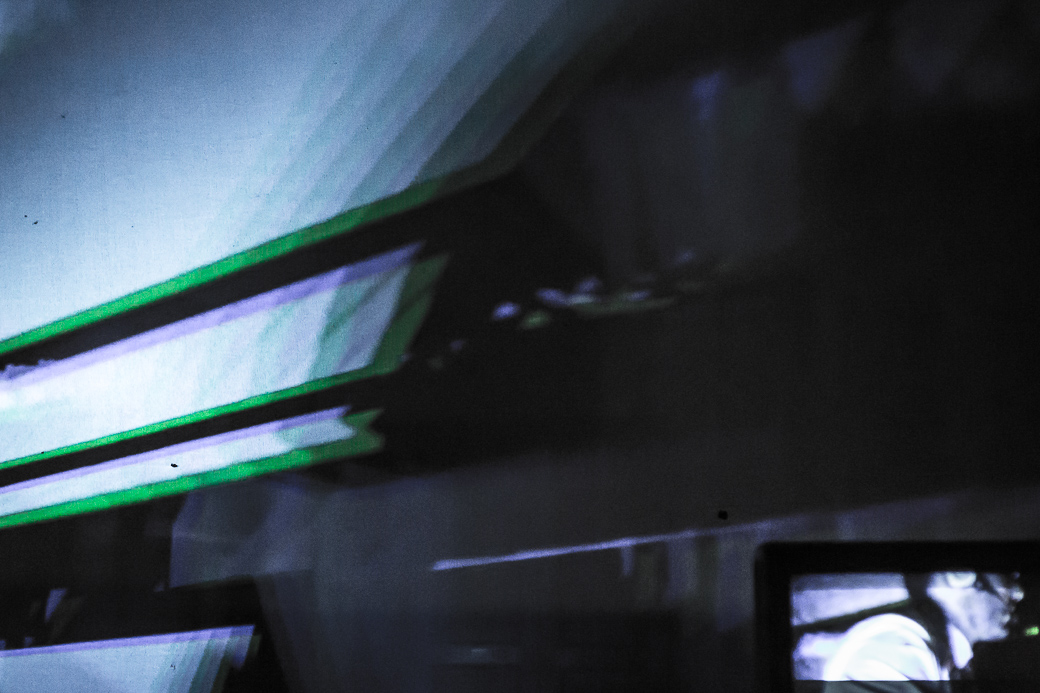
The first iteration of the piece was an installation where visitors sat at a mock call centre desk and put on a headset to hear the audio. As an experience, this iteration was my favourite, as you already had to physically embody the position of the call centre worker, which ensured that you couldn’t completely dissociate from the people answering the phones (you had to sit in their seat!). Despite the experiential qualities of the installation, I wasn’t keen on framing the piece entirely in the Art Gallery so I decided to release the piece as a record so that a wider audience could engage with it on their own terms. I sent the piece to The Death of Rave, Conor (who runs the label) connected with the piece and supported it really actively. The record did well, and I have seen a lot of interesting responses online, which I’m really pleased about.
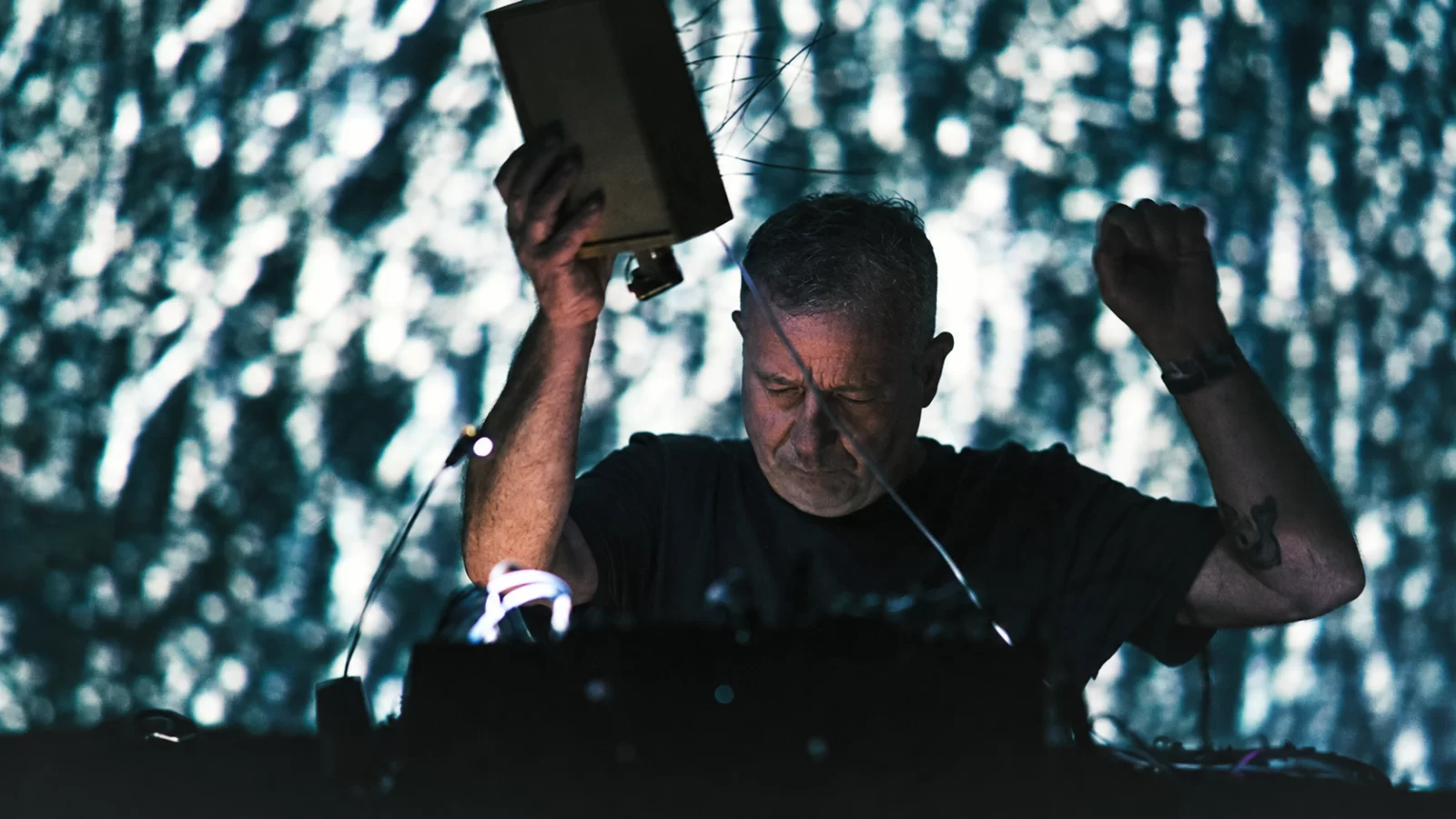
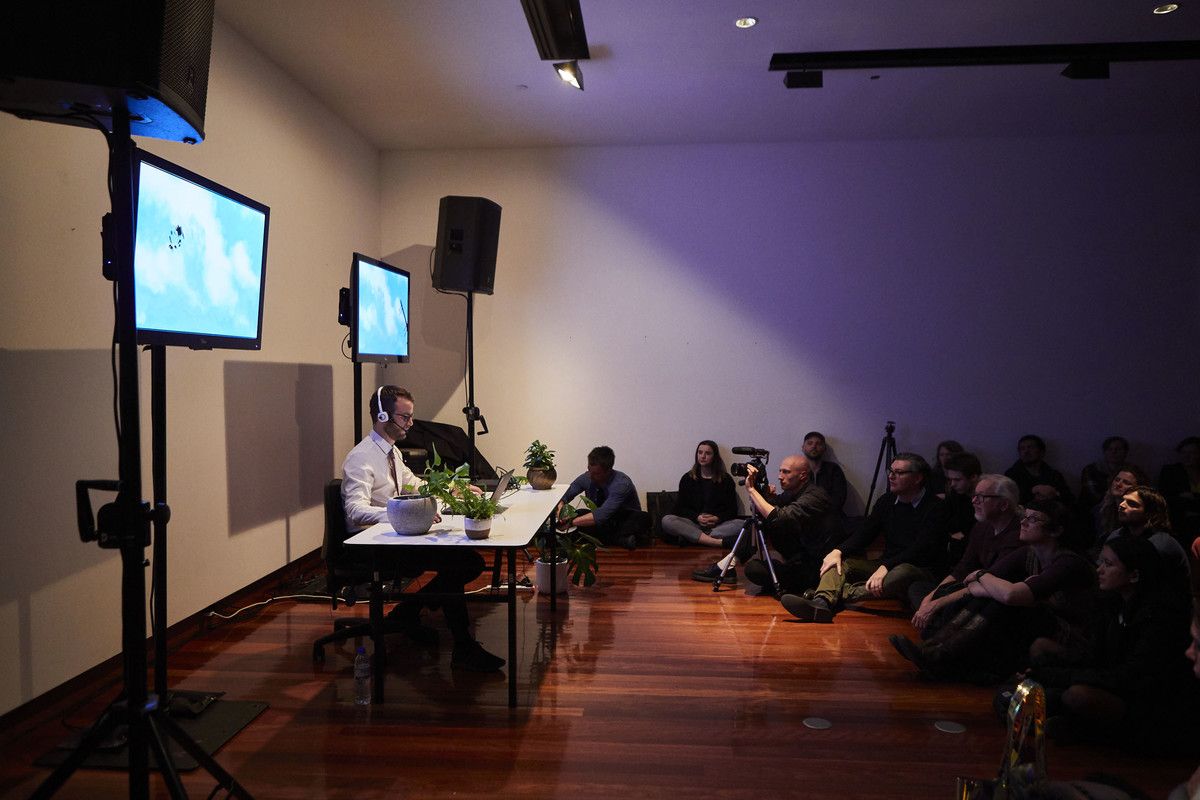
More recently, I’ve started working with the same ideas as a performance. I initially tried performing the material on the album, making some live calls and playing back some of the recordings, but that didn’t really work so I took some time out and worked on the ideas more. Since then I’ve developed a performance piece which has grown out of the same constituent parts, but which has a very different form. I perform as a Customer Service Agent at a desk with a headset microphone, reading a text over some live and prerecorded sound. I’ve started using a kind of prosthetic hand for sound generation too. The performed piece is, in part, an exploration of the Customer Service Agent’s vulnerable fleshiness that I mentioned earlier, caught up in this networked and mediating assemblage of technologies. These technologies in the call centre assemblage are disciplinary and constraining, but they also offer possibilities for intimacy across great distances. Through the piece I’m imagining future uses of these technologies that are intimate and caring. The first few performances of the piece have felt rewarding, so I’m looking forward to developing and performing it more.
Sources and image credits
- Original interview: Richard B. Keys. First published 2017-08-08.
- Sam Kidel / Customer Service Agent / Liquid Architecture programme, 2018 / Edited photograph
- Hero photograph: AI-assisted restoration / composition adaptation. Original photograph retained. Original colour or monochrome is preserved.
- Customer Service Agent / Liquid Architecture, 2018; uncredited photographer. Both later performance photographs are separate from the 2017 interview: Photograph source.
- Sam Kidel / Disruptive Muzak, Hand Signed, Sala Vanni, Florence, 2017 / Photo: Patrizio Buralli
- Original publication: Secret Thirteen archive.